









Wanggaoliao Night View Park
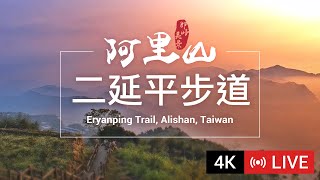
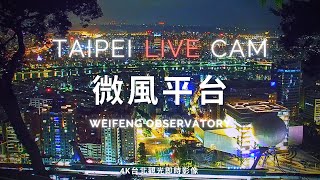
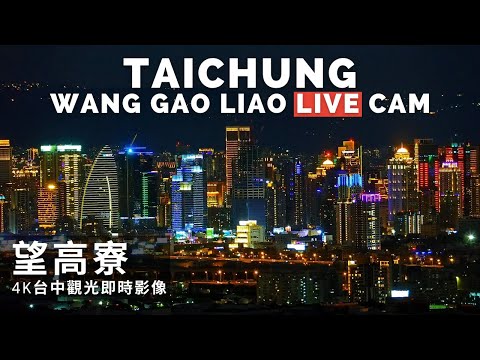
This live webcam takes you to Taichung Wanggaoliao from the lookout point of Wanggaoliao Night View Park on Dadu Mountain in Taichung City, Taiwan. Locally known as the Donghai Ancient Fort, the viewpoint offers breathtaking views of Taichung City and the surrounding towns, stretching all the way to the Port area on Taiwan’s west coast. Visitors can enjoy sunrise and sunset, as well as the romantic city lights at night.
Taichung City, Taichung, Taiwan
 TW
TW- 臺中市政府
Taichung City Government serves as the municipal administration for Taichung, a major urban center located in Taiwan. Situated at coordinates 24.1617 north latitude and 120.6470 east longitude, this entity functions as the primary governing body responsible for the city's civic operations and public services. As the administrative heart of the region, it oversees the complex infrastructure and social frameworks that define the local community within the broader context of Taiwanese governance.
The origins of this municipal authority trace back to 1 October 1920, when it was established by the Governor-General of Taiwan under Japanese colonial rule. Following the transfer of sovereignty from Japan to the Republic of China, the government was reconstituted as a provincial city administration on 25 October 1945. A significant structural change occurred on 25 December 2010, when Taichung City merged with Taichung County to become a special municipality, expanding its jurisdictional scope and administrative responsibilities.
The physical seat of this government has evolved significantly over the decades. The first city hall, known as Taichung Shiyakusho, was constructed in 1911 during the Japanese era and has since been repurposed as a cultural center since 2016. The current Taichung City Hall was completed and opened to the public on 10 October 2010, serving as the modern architectural landmark for the administration. This building stands as a testament to the city's growth and its transition into a contemporary special municipality.
The administrative structure is supported by a wide array of specialized bureaus and offices that manage diverse civic needs. Key departments include the Agriculture Bureau, Cultural Affairs Bureau, and Tourism and Travel Bureau, which help define the region's character. Other essential organizations such as the Environmental Protection Bureau, Health Bureau, and Transportation Bureau ensure the smooth operation of daily life. This comprehensive organizational framework allows the government to address the complex demands of a large urban population effectively.
The government's operational scope extends through various specialized units like the Budget, Accounting and Statistics Office and the Central District Household Registration Office. These entities work alongside the Police Department and Indigenous People Commission to maintain order and support community welfare. The presence of the Council for Hakka Affairs highlights the cultural diversity managed by the administration. This extensive network of offices ensures that the municipality can respond to the economic, social, and logistical requirements of its residents.
 The EARF Engine