









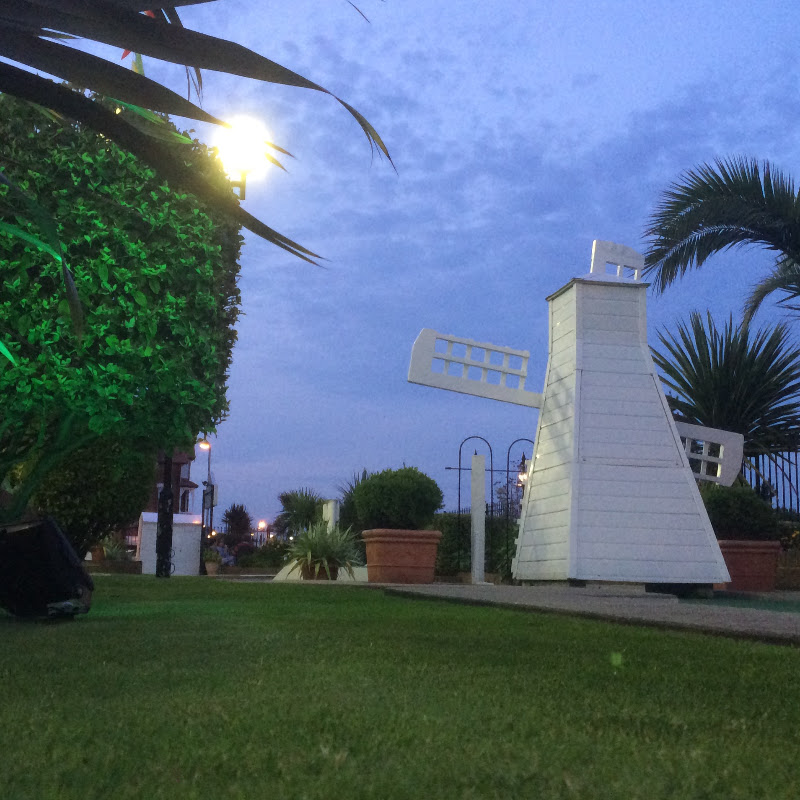
Lillyputt Mini Golf
Lillyputt Minigolf Broadstairs
110 subscribers
Broadstairs, England, United Kingdom

Broadstairs, England, United Kingdom
 GB
GB- Bradstowe
- Broadstairs, Kent
Broadstairs is a coastal town situated on the Isle of Thanet within the Thanet district of east Kent, England. Located approximately eighty miles east of London, it lies between the towns of Margate and Ramsgate. Administratively, it forms part of the civil parish of Broadstairs and St Peter's. The town is recognized as one of Thanet's primary seaside resorts, often described as the jewel in Thanet's crown due to its prominent position on the English coast.
The area's history begins with the inland village of St Peter's, established around 1080 following the construction of a parish church. A coastal shrine dedicated to St Mary existed on the cliff summit at Bradstow, where fishing settlements developed in the fourteenth century. The name Broadstairs derives from a flight of steps cut into the chalk cliffs to access this shrine. Charles Culmer is credited with reconstructing these stairs in 1350, and later generations of the Culmer family built defensive structures like York Gate in the sixteenth century.
The town spreads from Haine Road in the west to Kingsgate in the north and Dumpton in the south. It features seven bays of golden sand, including Louisa Bay, Viking Bay, and Joss Bay, separated by North Foreland. The landscape includes Victorian architecture and preserved historical sites such as the Shrine of Our Lady. The hamlet of Reading Street was established by Flemish refugees in the seventeenth century, adding to the diverse settlement pattern that merged with St Peters in 1895.
Broadstairs attracts visitors with its maritime history, literary connections, and seaside charm. The writer Charles Dickens and the future Queen Victoria were among its notable summer visitors during the nineteenth century. Cultural landmarks include the Dickens House Museum and Morelli's Ice Cream Parlour, which opened in 1932. The town retains a consistent policy of retaining historical characteristics while offering clean bathing waters and a variety of pubs and restaurants along its seafront.
The population was recorded at approximately twenty-five thousand in 2011, with similar figures noted for 2021. Transport access is provided by trains from London Victoria and St Pancras, as well as National Express coaches. The railway arrived in 1863, ending reliance on coach links to Whitstable. The local economy benefits from tourism and light industry, supported by its status as a popular holiday resort that has maintained its Victorian centre and maritime heritage for modern visitors.
 The EARF Engine