

Main Street
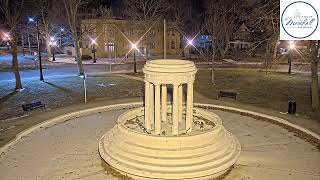
This live stream captures the heart of Sag Harbor’s Main Street, the charming downtown artery of this historic village on eastern Long Island. Lined with boutique shops, art galleries, classic restaurants, and preserved 19th-century buildings, the street hums with pedestrian activity and gentle vehicle flow.
Sag Harbor, New York, United States
 US
US- Village of Sag Harbor
- Sag Harbor, New York
- Sag Harbor, NY
Sag Harbor is an incorporated village located in Suffolk County, New York, within the United States. Situated on eastern Long Island, it occupies a unique administrative position spanning two towns: approximately three-fifths of its area lies within Southampton, while the remaining two-fifths fall under East Hampton, with Division Street serving as the dividing boundary. The village developed historically as a working port on Gardiners Bay, leveraging its coastal geography to become a significant maritime hub in the region.
Settled by English colonists between 1707 and 1730, the community emerged from migration patterns originating in New England. It supplanted the nearby port of Northwest due to deeper waters suitable for international shipping. By 1789, Sag Harbor was declared the first official port of entry to the United States, establishing a customs house that remains a key historical artifact. Its whaling industry peaked in the 1840s before collapsing with the discovery of petroleum, after which it transitioned into a summer destination for wealthy residents.
The entire business district is listed on the National Register of Historic Places as the Sag Harbor Village District. Notable landmarks include the Old Whaler's Church, the John Jermain Memorial Library, and the Custom House. The village features structures associated with its whaling past, such as the Greek Revival home commissioned by Benjamin Huntting II, now housing the Sag Harbor Whaling & Historical Museum. Oakland Cemetery contains memorials to men who died at sea, while the Bay Street marina complex anchors the East Hampton portion of the village.
Cultural appeal is deeply rooted in its literary and maritime heritage. Writer John Steinbeck resided here from 1955 until his death, and his home now hosts the Steinbeck Writers' Retreat. The village also contains Temple Adas Israel, the oldest synagogue on Long Island, and the historic freedmen's community of Eastville. Visitors are drawn to its preserved architecture, including the Bay Street Theatre, and its connection to figures like Herman Melville, who referenced the port in Moby Dick.
The population was 2,772 at the time of the 2020 census. The local economy historically relied on whaling and shipping but now supports tourism and residential services. Access is facilitated by the Long Island Rail Road's Sag Harbor Branch, which once carried summer visitors and now operates as a gardening store. The village retains its historic character through preserved buildings and cultural institutions that reflect its evolution from a bustling international port to a quiet coastal enclave.
 The EARF Engine