

Terminal Tower
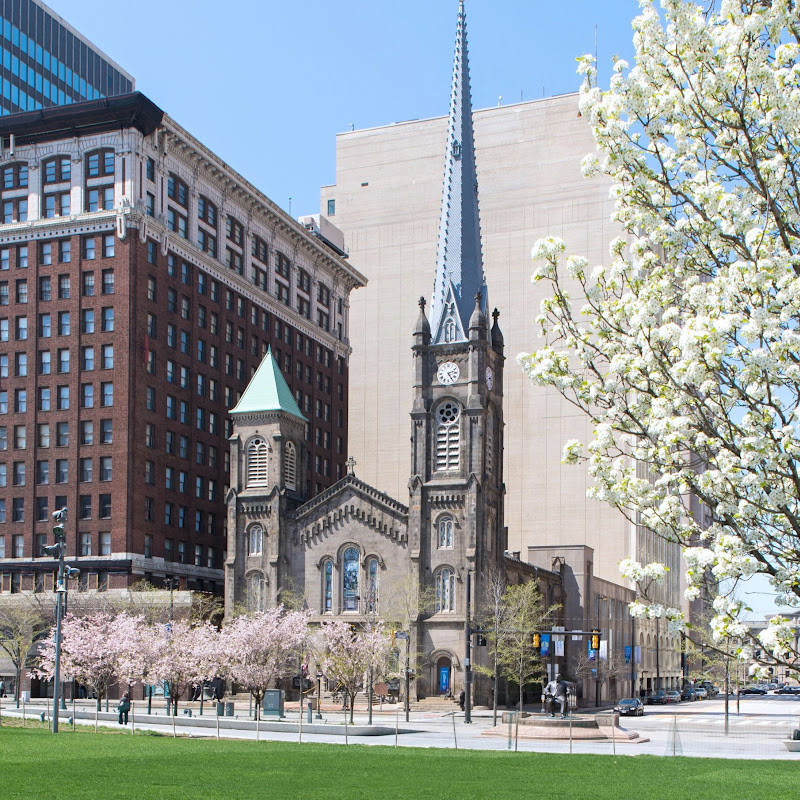
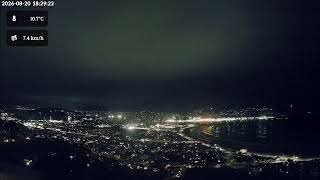
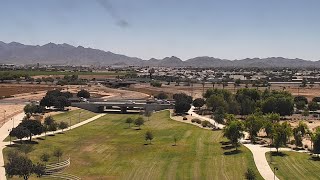
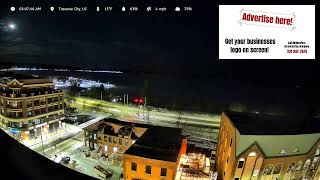
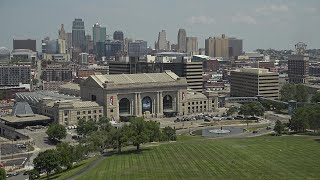
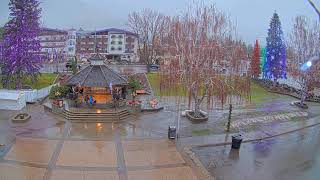
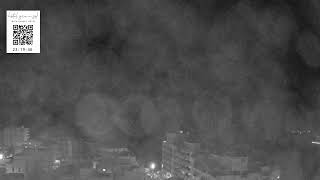
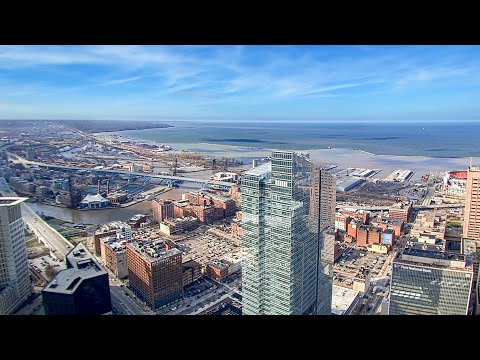
This live stream provides a high-altitude view from Terminal Tower in downtown Cleveland, overlooking Public Square and the surrounding city core. The camera captures Lake Erie horizons, changing weather across the shoreline, traffic and pedestrian movement in the square below, and wide skyline panoramas that shift throughout the day and night.
Cleveland, Ohio, United States
 US
US- Cleveland Heights
- Cleveland Heights, Ohio
- Cleveland Heights, OH
Cleveland Heights is a city located in Cuyahoga County, Ohio, within the United States. It sits atop the Portage Escarpment and is composed of three watersheds: Doan Brook, Dugway Brook, and Nine Mile Creek. The municipality covers a total area of 8.13 square miles, with the vast majority being land. As one of Cleveland's historic streetcar suburbs, it functions as a distinct urban entity adjacent to its larger neighbor.
The area remained largely timber and farmland until the late 1800s, with early development centered around quarries mining bluestone. Cleveland Heights was first organized as a hamlet in 1901 and incorporated as a village in 1903 before becoming a city on August 9, 1921. The community grew rapidly due to electric streetcars, and notable historical developments include the Euclid Golf Allotment, added to the National Register of Historic Places in 2002.
The city features seven municipal parks, including Cain Park and Forest Hill Park, which was donated by John D. Rockefeller's family. A significant architectural landmark is the Stadium Square Historic District on Taylor Road, characterized by Tudor Revival style homes and mixed-use structures built after 1926. The Coventry Village district serves as a commercial hub associated with artistic and bohemian communities.
Cleveland Heights has a diverse cultural history, including a significant influx of merchant class and professional Jewish people in the 1950s and later integration efforts by organizations like the Heights Community Congress. The city declared itself a nuclear-free zone in 1987. Its character is defined by its role as a model for urban planning and public-private partnerships, attracting visitors interested in its historical evolution and community resilience.
The population was 45,312 at the 2020 census, with a median age of 36.2 years. The economy includes diverse sectors such as healthcare, law, and finance, supported by a highly educated workforce where 41.7% hold a bachelor's degree or higher. The city experiences four distinct seasons, with July being the warmest month, averaging 71.9 °F, while summers often bring high humidity and temperatures in the low 90s.
 The EARF Engine