Live stream unavailable
This camera is offline or temporarily unavailable. It may be under maintenance, having technical trouble, or it may have been removed by the provider. Listings are monitored continuously and this page updates when the stream returns.


Praia de São Conrado
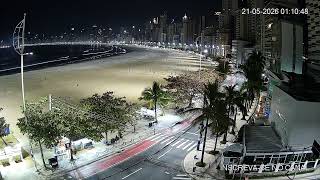
This live camera in Rio de Janeiro, Brazil, shows Praia de São Conrado, also known as Pepino Beach — a famous spot for hang-glider and paraglider landings from Pedra Bonita. Nestled beneath the towering Pedra da Gávea, the view captures turquoise Atlantic waters, golden sands, and the lush slopes of Rio’s southern coast.
Rio de Janeiro, Brazil
 BR
BR- São Sebastião do Rio de Janeiro
Rio de Janeiro is a major city situated on the South Atlantic coast of Brazil. It serves as the capital of the state of Rio de Janeiro and stands as the second-most-populous city in the nation after São Paulo. The urban area is compressed between the Tijuca Range and the sea, featuring a unique harbor that appears as the mouth of a river. This setting includes spectacular geographic features such as Sugarloaf Mountain, Corcovado Peak, and the hills of Tijuca, which collectively contribute to its status as one of the Seven Natural Wonders of the World.
The city was founded on 1 March 1565 by the Portuguese, led by Estácio de Sá, under the name São Sebastião do Rio de Janeiro. Initially established as a fortification against French privateers, it later became the seat of the Portuguese Royal Court in 1808, making it the only European capital outside Europe at that time. It served as the capital of Brazil until 1960, when the national government moved to Brasília. The region's history includes significant colonial periods and the arrival of African slaves through the Valongo Wharf, now a World Heritage Site.
The city is defined by its distinct districts, with the South Zone holding most landmarks and world-famous beaches within a small area. Notable sites include the Christ the Redeemer statue atop Corcovado mountain, Sugarloaf Mountain with its cable car, and the Maracanã Stadium. The harbor entry is surrounded by dramatic peaks, while the city also features colonial fortresses and modern infrastructure. The Carioca Landscapes between the Mountain and the Sea have been inscribed on the UNESCO World Heritage list, highlighting the integration of natural and urban environments.
Rio de Janeiro is renowned for its laid-back beach culture, annual carnival, samba, and bossa nova music. It attracts millions of visitors with its breathtaking landscapes and vibrant traditions. The city hosted the 2016 Summer Olympics and Paralympics, becoming the first South American city to host these events. It also hosted the 2014 FIFA World Cup final and the 2013 FIFA Confederations Cup, cementing its reputation as a global hub for sports and cultural festivals.
As of 2025, the city has a population of 6,730,729. It possesses the second-largest municipal GDP in Brazil and is home to major corporations like Petrobras and Vale. The city is a significant center for research and development, accounting for 17 percent of national scientific output. With its status as a major tourist destination and economic powerhouse, Rio de Janeiro remains one of the most visited cities in the Southern Hemisphere.
 The EARF Engine