








Live stream unavailable
This camera is offline or temporarily unavailable. It may be under maintenance, having technical trouble, or it may have been removed by the provider. Listings are monitored continuously and this page updates when the stream returns.


San Antonio Port (2)
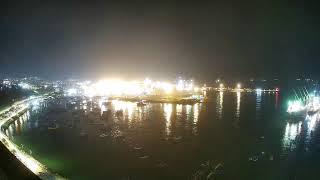
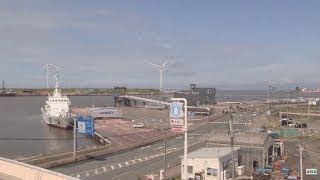
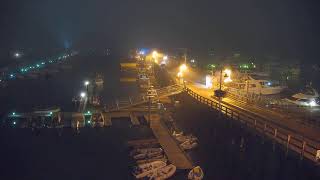
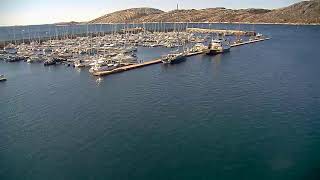
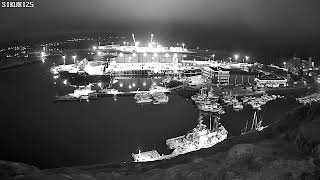
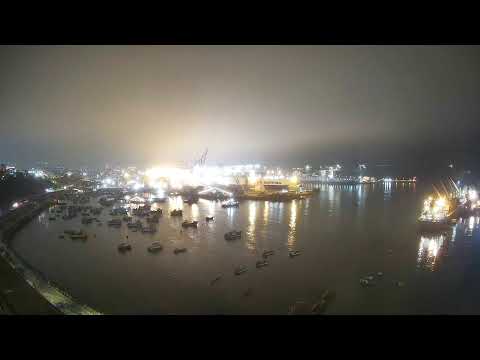
This live camera shows a sweeping view of the Port of San Antonio on the Pacific coast of Chile, in the Valparaíso Region near the city of San Antonio. The shot captures long container-berths, cranes lifting boxes, and cargo ships manoeuvring under the open sky, with the port’s urban districts rising behind. At this busy maritime hub, you can often spot stacked containers and tug boats gliding in the water, reflecting the port’s role as Chile’s largest freight gateway. The view offers a genuine real-time glance at the operations and setting of this key coastal infrastructure.
San Antonio, Valparaíso, Chile
 CL
CL- San Antonio, Chile
San Antonio is a Chilean port city, commune, and the capital of the San Antonio Province in the Valparaíso Region. Situated on hills and coastal dunes north of the Maipo River's mouth, it is divided by the Arévalo and El Sauce estuaries. The city borders Cartagena to the north, Melipilla and Santo Domingo to the east and south, and the Pacific Ocean to the west, covering an area of 502.5 square kilometers.
Nomadic hunters and gatherers were the first inhabitants of the central coastal zone, with evidence of habitation extending back approximately thirteen thousand years. The city's modern history includes significant challenges, such as the 1985 Santiago earthquake which destroyed eighty percent of the city. Additionally, the port was shut down by the 2010 earthquake but resumed operation at eighty percent capacity shortly after.
The city features seaside attractions including the Paseo Bellamar walkway, the Mall Arauco San Antonio, and the Casino del Pacífico, where visitors can observe merchant ships and port activities. Key landmarks include Grúa 82, a national monument for observing seals, and the Municipal Museum of Natural Sciences and Archaeology, which houses blue whale skeletons and wildlife collections. Panoramic viewpoints on the hills of Cristo del Maipo and Centinela offer extensive views.
Tourism initiatives focus on local cuisine, emphasizing seafood and oenology through The Seaboard Program of the Poets supported by CORFO. This route connects local production, chefs, and vineyards such as Matetic and Casa Marín. The region promotes quality cuisine as an essential part of its identity, with training programs for winegrowers and food producers enhancing the visitor experience centered on regional gastronomy and cultural heritage.
San Antonio has a population of 86,239 as of 2017. It serves as the main freight port in Chile, surpassing Valparaíso in the twenty-first century, and acts as the hub for a fishing area stretching from Rocas de Santo Domingo to Cartagena. The city experiences a Mediterranean climate with an average annual temperature of 14 °C and receives 570 mm of annual precipitation, concentrated primarily in June.
 The EARF Engine