

Place de la Liberté
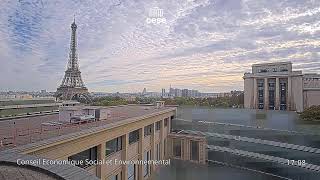
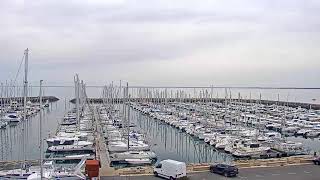
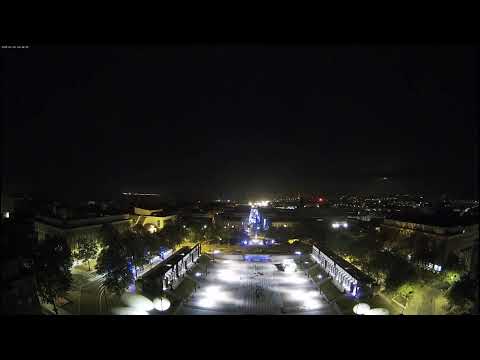
This live camera shows the Place de la Liberté in Brest, Finistère, France. From this vantage point you can see the broad central square flanked by modern-granite facades rebuilt after the war, with trams gliding past and the sea-ledge of the Brest roadstead in the background. The scene captures the lively intersection of commerce, transport and maritime geography, offering a real-time view into the heart of the city.
Brest, Finistère, France
 FR
FR- Brest (France)
- Brest, Bretagne
- Brest, Finistere
Brest is a port city situated in the Finistère department within the Brittany region of France. It occupies a strategic position on the western edge of continental France, nestled in a sheltered bay near the western tip of the peninsula. As an important harbour, it serves as the second largest French military port after Toulon. Although it is by far the largest city in Finistère, the administrative seat or préfecture of the department is located in the much smaller town of Quimper.
The settlement's origins trace back to the 4th century AD when it was known as Osismis, later recorded as Bresta in 856 AD. Its medieval history centered on its castle, which became a key defensive stronghold under Breton dukes and later passed to the French crown in 1491. Cardinal Richelieu established a military harbour there in 1631, transforming it into a naval base. The city was heavily damaged during World War II but was subsequently rebuilt, with its modern development following deindustrialization and a shift toward the service sector.
The city's character is defined by its dramatic landscape and utilitarian architecture resulting from post-war reconstruction. Notable landmarks include the Pont de Recouvrance, a massive drawbridge, and the historic rue de Siam. The oldest monuments are the castle and the Tanguy tower, which houses a museum of dioramas. While much historical architecture was lost to bombing, authentic 17th-century streets remain in Recouvrance, and the naval port extends along both banks of the Penfeld river.
Brest offers significant cultural appeal through its maritime heritage and educational institutions. It hosts the international festival of the sea every four years, featuring old riggings from around the world. Visitors can explore the Musée national de la Marine in the ancient castle, the Océanopolis marine centre, and a botanical garden specializing in endangered species. The city is also a major university town with 23,000 students and several prestigious elite schools focused on naval and technical studies.
As of 2023, Brest has a population of 142,346 inhabitants, forming Western Brittany's largest metropolitan area with 370,000 people. It provides services to the one million inhabitants of Western Brittany and ranks as the 25th most populous city in France. The economy has shifted from its industrial past to a service-oriented model supported by research centres focused on the sea. Its location at the western extremity of metropolitan France makes it a unique gateway for maritime activities.
 The EARF Engine