Live stream unavailable
This camera is offline or temporarily unavailable. It may be under maintenance, having technical trouble, or it may have been removed by the provider. Listings are monitored continuously and this page updates when the stream returns.


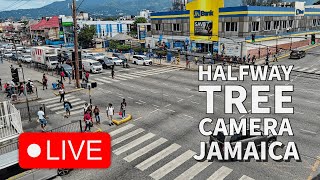
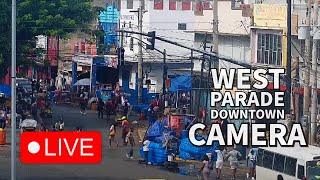
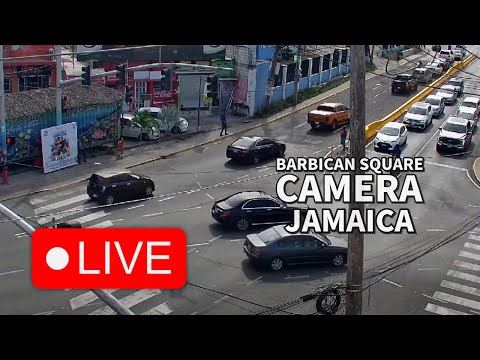
Kingston, Jamaica
 JM
JM- Capital of Jamaica
Kingston serves as the capital and largest city of Jamaica, situated on the southeastern coast of the island. It faces a natural harbour protected by the Palisadoes, a long sand spit connecting Port Royal and Norman Manley International Airport to the rest of the nation. As the largest English-speaking city south of the United States in the Western Hemisphere, it holds significant administrative importance. The local government bodies of Kingston and St. Andrew parishes were amalgamated in 1923 to form the Kingston and St. Andrew Corporation, governing the greater Corporate Area.
The city was founded on 22 July 1692, shortly after an earthquake devastated Port Royal, with survivors initially camped on Colonel Barry's Hog Crawle. Growth accelerated after Port Royal's destruction by fire in 1703, when surveyor John Goffe laid out a grid plan to facilitate commerce. By 1716, it became Jamaica's largest town and trade centre. Government offices transferred from Spanish Town in 1872, solidifying its role as the administrative capital despite earlier resistance regarding its suitability for the Assembly.
The central area comprises two districts: the historic Downtown and New Kingston. The city proper is bounded by communities such as Six Miles, Stony Hill, Papine, and Harbour View. Following the 1907 earthquake, a height restriction of no more than sixty feet was instituted, resulting in three-story reinforced concrete buildings. The waterfront area expanded significantly during the 1960s, with old buildings demolished to make way for hotels, shops, offices, and cultural centres by the 1980s.
Kingston is a hub for reggae music and hosts the Mona campus of the University of the West Indies, founded in 1948. The city features diverse religious institutions, including the Holy Trinity Cathedral, consecrated in 1911, and strong Afro-Christian syncretic followings like the Rastafari movement. It hosted the Commonwealth Games in 1966 and has experienced periods of civil unrest, including significant riots in the 1990s and armed conflicts in 2010 that attracted international attention.
The population is recorded at 937,700 as of 2025. The demographic makeup is predominantly of African descent, with large minority groups including East Indians, Chinese, Europeans, and Syrians. The economy benefits from the Chinese community's role in retail markets and the city's status as a main transport hub. Access is provided via Norman Manley International Airport and the domestic Tinson Pen Aerodrome, supporting its function as a key commercial and logistical centre for the island.
 The EARF Engine