








Live stream unavailable
This camera is offline or temporarily unavailable. It may be under maintenance, having technical trouble, or it may have been removed by the provider. Listings are monitored continuously and this page updates when the stream returns.

JR West Osaka Loop Line
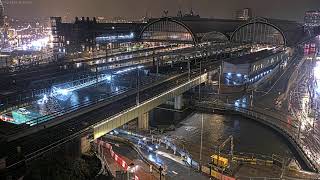
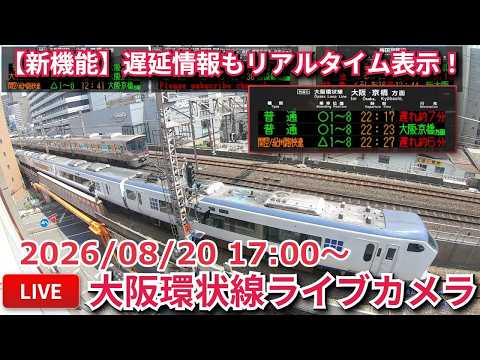
This live webcam stream shows a view along the JR West Osaka Loop Line between Fukushima Station and Noda Station. Positioned with Fukushima Station about 200 meters to the left and Noda Station to the right, the feed captures trains smoothly passing through, along with the everyday rhythm of commuter activity and the surrounding urban landscape of Osaka.
Fukushima-ku, Osaka, Japan
 JP
JP- 福島区
Fukushima-ku is one of the twenty-four wards comprising Osaka city in Japan. Situated in the Kansai region, it serves as a distinct administrative division within the metropolitan area. The ward is geographically defined by natural waterways, bordered by the Yodo River to the north and the Dōjima River to the south. This positioning places it in close proximity to major commercial hubs, influencing its modern development and urban character.
The area originated as a suburban farm village during the Edo period, characterized by marshy terrain and narrow waterways shaped by historical river works. Large factories, particularly textile mills, emerged during the Meiji period, followed by the establishment of Panasonic in 1918. Fukushima Ward was formally established on April 1, 1943, formed from parts of Nishiyodogawa, Konohana, and Kita wards, marking its transition into a formal municipal entity.
The ward features a mix of residential high-rises, office buildings, and commercial districts. Notable structures include City Tower Nishi-Umeda and The Tower Osaka, both standing 177 meters tall with fifty floors. Historical sites include the Fukushima-tenmangu shrine and the birthplace of Fukuzawa Yukichi at Hotarumachi. The area also retains industrial elements, with printing companies and automobile parts wholesalers operating alongside redeveloped factory sites.
Cultural attractions include the long-standing association with riverbank wisteria, known as Noda fuji, which draws visitors to the area. Parks such as Yodo River Park and Shimo-fukushima Park provide green spaces for residents. The ward hosts the WISTE Noda-Hanshin shopping center and various shrines like Noda-ebisu-jinjya. These elements combine to create a locale that balances historical heritage with modern leisure and commercial activities.
As of 2021, the population stands at 79,695 residents. The economy is supported by wholesale businesses, printing divisions, and corporate headquarters such as Hanshin Electric Railway. Transport access is robust, served by JR West, Hanshin Electric Railway, Osaka Metro, and Keihan Electric Railway lines. Major roads like National Route 2 and the Hanshin Expressway facilitate connectivity to Umeda and other business centers in western Japan.
 The EARF Engine