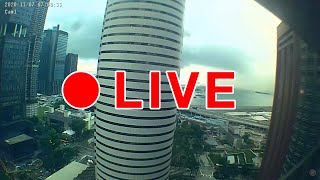
Live stream unavailable
This camera is offline or temporarily unavailable. It may be under maintenance, having technical trouble, or it may have been removed by the provider. Listings are monitored continuously and this page updates when the stream returns.


Shinagawa-ku, Tokyo, Japan
 JP
JP- Shinagawa
- Shinagawa-ku, Tokyo
- 品川区
Shinagawa is a special ward within the Tokyo Metropolis in Japan, situated on the coast of Tokyo Bay. It is bordered by the special wards of Kōtō to the east, Minato to the north, Meguro to the west, and Ōta to the south. The ward encompasses natural uplands forming the eastern end of the Musashino Terrace, lowlands, and extensive reclaimed land areas along the waterfront.
Historically, the area served as the first post town on the Tōkaidō route from Nihonbashi to Kyoto during the Edo period. Following the Meiji Restoration, Shinagawa Prefecture was established in 1869 before being integrated into Tokyo Prefecture in 1871. The current ward was formed on March 15, 1947, by merging a smaller Shinagawa Ward with the neighboring Ebara Ward.
The ward consists of five main areas: Shinagawa, Ōsaki, Ebara, Ōi, and Yashio districts. Notable sites include the Ōmori Shell Mounds, the site of the Suzugamori Execution Grounds, and several historic temples and shrines. The area retains its post-town function with large hotels near the station, while the district around Shinagawa Station serves as a major business hub.
Cultural attractions include the Nikon Museum, the Museum of Package Culture, and the Shinagawa Historical Museum. The ward hosts the Ebara Shichi-Fuku-Jin pilgrimage and features shopping districts like Togoshi Ginza. It is also home to the Ohi Racecourse and various international schools, reflecting its diverse community and historical significance in Japanese culture.
As of 2021, the population was 415,729. The economy features corporate headquarters for companies like Nikon and former sites for Sony. Transport is extensive, with Shinagawa Station serving the Tōkaidō Shinkansen since 2003, alongside JR Yamanote and Keikyu lines. The ward also houses the main motor vehicle registration facility for central Tokyo.
 The EARF Engine