







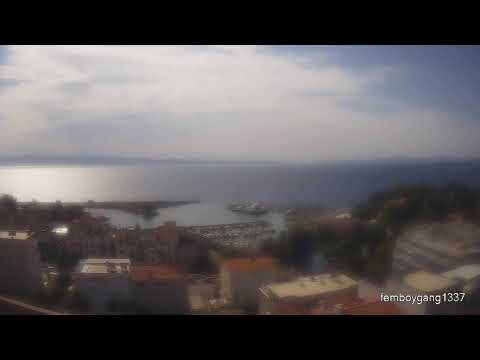


Split Overview and Marina Zenta
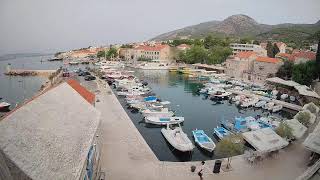
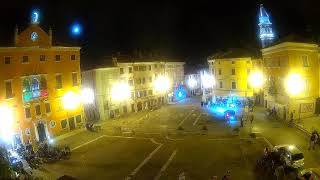
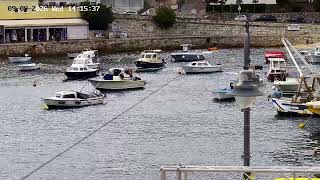
This live webcam from Marvie Hotel shows Marina Zenta in Split, Croatia — a small, scenic harbour on the Adriatic coast just east of the main port. Located in the historic Dalmatian region, Split is known for its beautiful beaches and the ancient Diocletian’s Palace in the heart of the old town.
Split, Split-Dalmatia, Croatia
 HR
HR- Spalatum
- Spalato
- Aspalathos
Split is the second-largest city in Croatia, situated on the eastern shore of the Adriatic Sea. It serves as the administrative seat of Split-Dalmatia County and stands as the largest city on the Croatian coast. The urban area extends across a central peninsula toward surrounding suburbs and hinterland, functioning as a key economic, cultural, and transportation hub for the region.
Founded as the Greek colony of Aspálathos in the 3rd or 2nd century BCE, the settlement later became the site of Diocletian's Palace in 305 CE. After the sack of Salona, Roman refugees settled the palace, establishing Split as a Byzantine city. It evolved through Venetian and Habsburg rule before joining Yugoslavia and eventually independent Croatia in 1991.
The historic core is a UNESCO World Heritage Site since 1979, reflecting continuous urban life from late antiquity. Built around Diocletian's Palace, the city features Roman walls, squares, and temples. The bell tower of Saint Domnius, the Dalmatian dog, and a donkey are recognized symbols of the city, which retains its ancient layout within the fortified palace structure.
Split attracts over one million visitors annually as a popular tourist destination with an ideal climate providing 2,800 hours of sunlight yearly. It hosted the 1979 Mediterranean Games and 1990 European Athletics Championships. The city is also known for its football club Hajduk and local traditions, including the oldest European supporters group, Torcida, established in 1950.
The city has a population of 160,577 as of 2021, with a metropolitan area of approximately 310,000. Its economy is supported by tourism, education via the University of Split, and the Port of Split, one of the busiest passenger ports in the Mediterranean. Winters are mild, though snowfall occurs nearly every winter, often causing traffic disruption.
 The EARF Engine