








Terminal Nes - Ameland
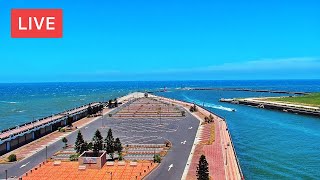
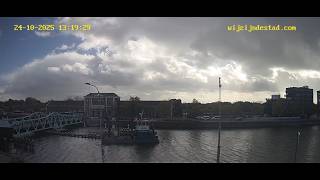
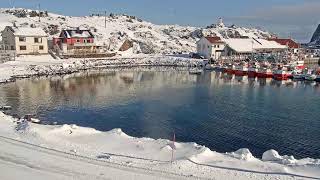
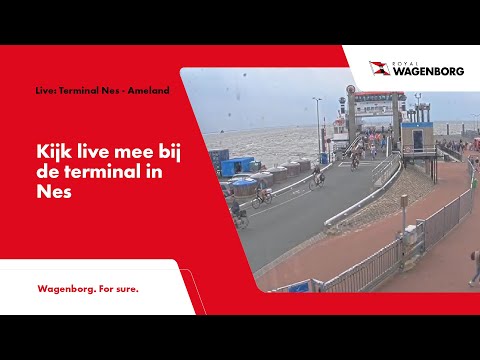
This live cam captures Terminal Nes on Ameland—a bustling ferry harbour that serves as the main gateway to this idyllic Dutch Wadden Sea island. Watch as ferries arrive and depart against a backdrop of serene coastal landscapes and shifting skies. The terminal’s efficient operations and vibrant maritime activity provide a unique insight into the island’s connectivity and its enchanting seaside charm.
Nes, Friesland, Netherlands
 NL
NL- Nes, Dongeradeel
Nes is a small village situated within the Noardeast-Fryslân municipality in the northern province of Friesland, Netherlands. It occupies a specific geographic position defined by its coordinates at 53.3961 north latitude and 6.0467 east longitude. The settlement functions as a distinct residential community within the broader administrative framework of the Dutch province, contributing to the rural character of the region.
The village holds historical significance dating back to the early middle ages, where it originated as a terp, an artificial living mound constructed for protection against flooding. It was first documented in 1369 under the name Nesse, which translates to headland, reflecting its elevated topography. Prior to the municipal reorganization in 2019, Nes was administratively part of the Dongeradeel municipality, marking a shift in its local governance structure.
Architecturally, Nes is characterized by a rectangular village structure supported by three main paths, typical of its historical development on the terp. A prominent landmark is the Dutch Reformed church, which dates back to the 12th century, with its tower added slightly later to complete the historic skyline. The building underwent significant restoration work in 1974, preserving its medieval heritage and structural integrity for future generations.
The cultural landscape of Nes is enriched by its notable inhabitants, including the children's author Nynke van Hichtum, who lived from 1860 to 1939. Her legacy adds a literary dimension to the village's identity, connecting it to the broader Frisian cultural tradition. The area offers a quiet, historical atmosphere that appeals to those interested in regional history and the preservation of traditional Dutch village life.
Demographically, the village had a population of around 376 residents as of January 2017, indicating its status as a small, close-knit community. In 1840, the population was recorded at 538 people, showing a gradual decline over the intervening centuries. The village maintains its role as a residential hub within Friesland, with its economy and daily life deeply rooted in the local agricultural and historical context of the Netherlands.
 The EARF Engine