








Live stream unavailable
This camera is offline or temporarily unavailable. It may be under maintenance, having technical trouble, or it may have been removed by the provider. Listings are monitored continuously and this page updates when the stream returns.


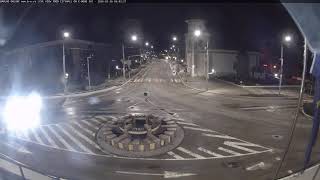
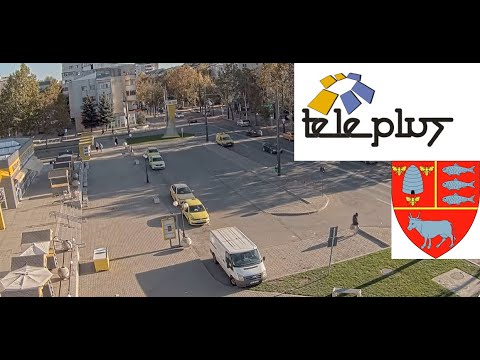
Vaslui, Romania
 RO
RO- Municipiul Vaslui
- Vászló
- Wassluy
Vaslui is a city located in eastern Romania, serving as the administrative seat of Vaslui County within the historical region of Western Moldavia. Situated on the Delea Branch of the Danube, it functions as a significant local hub in the area. The city administers five surrounding villages: Bahnari, Brodoc, Moara Grecilor, Rediu, and Viișoara. Its geographic position places it within the broader Moldavian landscape, contributing to its role as a central point for the county's governance and regional administration.
Archaeological evidence indicates that the territory was inhabited since the Neolithic period, with the town developing as a provincial center from the 14th century onward. The name Vaslui first appeared in a Polish document in 1375 and was mentioned again in 1435 regarding Prince Iliaș. The city reached its peak importance in the 15th century as a second-rank capital of Moldavia under Stephen the Great, who won a major battle against the Ottoman Empire there in 1475. After the capital moved to Iași and Bârlad became an administrative center, Vaslui declined for three centuries before being proclaimed the county administrative center in 1968.
The city features several neighborhoods including 13 Decembrie, Ana Ipătescu, Castanilor, Copou, Delea, Alecu Donici, Gheorghe Racoviță, Green Park, Gura Bustei, and Traian. Notable heritage sites include the Church of the Beheading of Saint John the Baptist, founded by Prince Stephen the Great in 1490, and the Royal Court built by Stephen II. The Stephen the Great Monument was relocated from Chișinău to Vaslui during World War II. The urban layout includes compact settlements for minority groups, with Roma communities living in Rediu and Brodoc, and Lipovans maintaining a church in the town center.
Vaslui has a rich cultural history marked by a large Jewish community that arrived from Galicia in the 19th century, forming 37% of the population in 1899 and hosting the Vasloi Hasidic dynasty. This community was decimated by pogroms and emigration during the Holocaust and communist periods. Today, the city offers educational institutions named after notable figures like Ioan Cuza and Mihai Eminescu. Visitors can explore its historical architecture and learn about its diverse ethnic makeup, which includes Romanians, Romani people, Lipovans, and others, reflecting centuries of social change and resilience.
According to the 2021 census, Vaslui has a population of 63,035, making it the 40th largest city in Romania. The economy is driven by textiles, including clothing and knitted wear, and food industries such as baked goods, vegetable oil, meat, and dairy. Transport infrastructure includes the Vaslui railway station, originally designed by Anghel Saligny and opened in 1886, along with national roads DN24, DN2F, and DN15D. Public transport consists of buses and taxis, with a trolleybus line operating since 2016. The closest airports are in Iași and Bacău.
 The EARF Engine