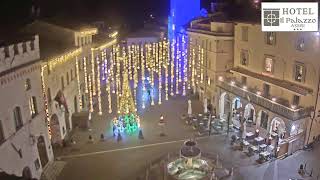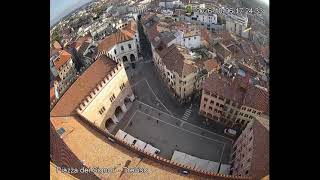











Piazza San Rufino
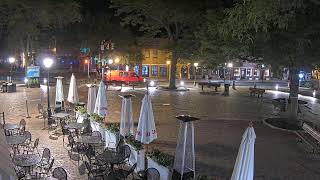
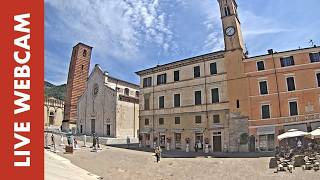
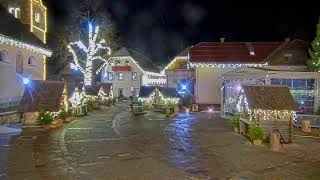
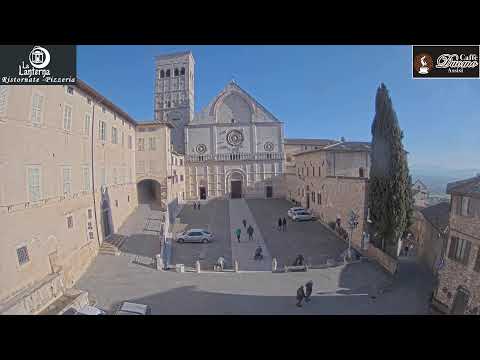
This live camera in Assisi, Umbria, Italy, shows Piazza San Rufino, the square facing the Cathedral of San Rufino. The view captures the historic heart of Assisi, featuring its medieval architecture, cobblestone streets, and the lively atmosphere of one of the city’s most important landmarks.
Assisi, Perugia, Italy
 IT
IT- Asisium
- Assisium
Assisi is a town and comune located in the Province of Perugia within the Umbria region of Italy. Situated on the western flank of Monte Subasio, it serves as a significant administrative center in this central Italian area. The settlement occupies a strategic position on the hillside, historically defined by its Roman foundations and subsequent medieval expansion. Its geographic setting contributes to its identity as a prominent destination within the Umbrian landscape.
The earliest inhabitants were the Umbri, with Romans establishing the municipium Asisium after taking control of central Italy in 295 BC. The town was destroyed by Ostrogoths in 545 and later came under Lombard and Frankish rule before becoming an independent Ghibelline commune in the 11th century. It gained international heritage status when UNESCO designated its Franciscan structures as a World Heritage Site in 2000, recognizing the profound historical impact of St. Francis and St. Clare who founded their orders there.
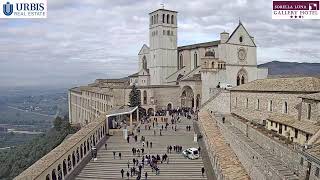
The historic center is dominated by medieval castles, including the Rocca Maggiore rebuilt in 1367, and well-preserved Roman remains such as the Temple of Minerva and an amphitheater. Key landmarks include the Basilica of San Francesco, constructed between 1228 and 1253, which houses frescoes by Cimabue and Giotto. Other notable sites feature the Cathedral of San Rufino, the Basilica of Santa Chiara, and the Eremo delle Carceri monastery, reflecting a rich architectural legacy spanning Romanesque, Gothic, and Baroque styles.
As a major pilgrimage site linked to St. Francis, Assisi attracts visitors interested in religious history and nature. The town hosts the Porziuncola chapel and the Sanctuary of Rivotorto, central to Franciscan tradition. Cultural appeal is enhanced by periodical exhibits and fairs that enrich the visitor experience. The gentle saint is remembered as a lover of nature, with legends of his preaching to birds drawing non-Christians alongside faithful pilgrims seeking spiritual connection in this peaceful Renaissance-developed environment.
Assisi had a population of 27,605 as of 2023. Access is facilitated by the Assisi Train Station in Santa Maria degli Angeli, located three kilometers from the center, with connections via Foligno and Terontola. Buses link the town to Perugia and other nearby cities. The compact medieval layout allows easy exploration on foot, though hilly streets require effort. The climate varies by season, with summer months offering opportunities for rest in cool churches or ice cream breaks amidst the historic surroundings.
 The EARF Engine