










Magaluf/Palmanova
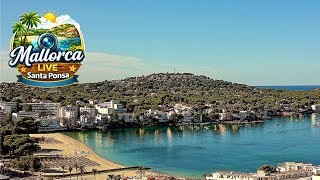
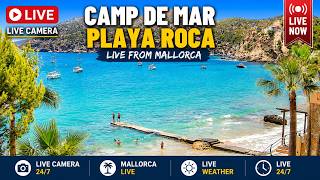
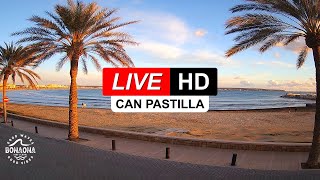
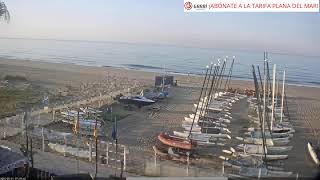
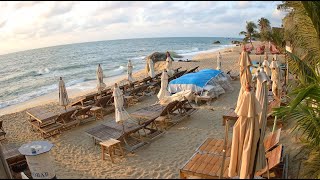
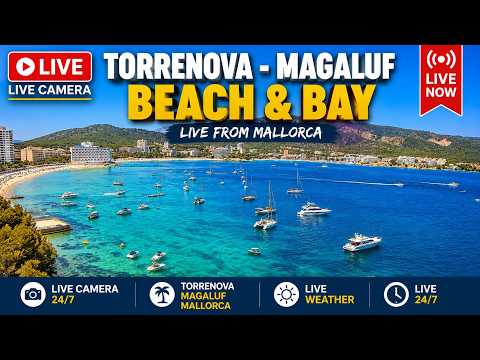
This live 4K webcam shows the beaches of Magaluf, Palmanova, and Playa Son Matías on the southwest coast of Mallorca, Spain. Magaluf is famous for its vibrant nightlife, golden sands, and lively beach bars. Just next door, Palmanova offers a calmer vibe with clear waters and family-friendly beaches. Between them, Playa Son Matías features soft sand and a relaxed atmosphere, ideal for a peaceful day by the sea.
Calvià, Balearic Islands, Spain
 ES
ESCalvià is a municipality and resort town located on the island of Mallorca within the Spanish autonomous community of the Balearic Islands. Situated in the southwestern part of the island, it lies between the Serra de Tramuntana and the Serra de Na Burguesa mountain ranges. The municipal seat is the town of Calvià Vila, which serves as the administrative center for the wider area. The municipality covers an approximate area of 145 square kilometers and is bordered by Puigpunyent and Estellencs to the north, Palma de Mallorca to the east, Andratx to the west, and the Mediterranean Sea to the south.
The area was first populated during the Neolithic Era, with early settlements established by sailors from Italy and the Near East. The historical epic that defines local culture is the landing of King James I of Aragon in Santa Ponça on 10 September 1229, which marked the conquest of the island from Muslims who had invaded in 903. Following the conquest, Calvià was granted to Berenguer de Palou and became part of the Barony of the Bishops of Barcelona. Since 1248, the town has maintained its own parochial church, Sante Ihoannes Caviano, dedicated to Saint John the Baptist.
The character of Calvià is defined by a scattering of urban centers created through twentieth-century tourism development and urbanization. The inland town of Calvià is small compared to the coastal resorts, which include Magaluf, Palma Nova, Portals Nous, Santa Ponsa, and Peguera. Notable sites include the Puig de sa Morisca Archaeological Park, which conserves remains of a talaiot, and the Molí de Santa Ponça, an old windmill at the highway junction. The area also features the Punta de El Toro nature reserve and hiking trails in the hills to the southeast.
Calvià is an area with the largest number of tourists in the Balearic Islands, attracting visitors seeking value-for-money package deals and beach holidays. While it lacks the intense clubbing reputation of Magaluf, it offers sandy beaches in Santa Ponsa and Peguera, though access to stony areas between them is poor. The region has a history of agricultural cultivation along the Bay of Santa Ponça before mass tourism developed from the 1960s. Visitors can explore medieval masonry at viewpoints or visit the modern, open-air parish church Nostra Senyora de l'Esperança.
The municipality had a population of 53,793 as of 2025, making it the second most populated area in the archipelago after Palma. The economy is heavily driven by tourism, with transport access provided by roads such as the Ma-1 and Ma-20, and TIB buses connecting major resorts to Palma. The climate supports outdoor activities, with a total solar eclipse visible in August 2026 offering a unique astronomical event for observers on the coast.
 The EARF Engine