







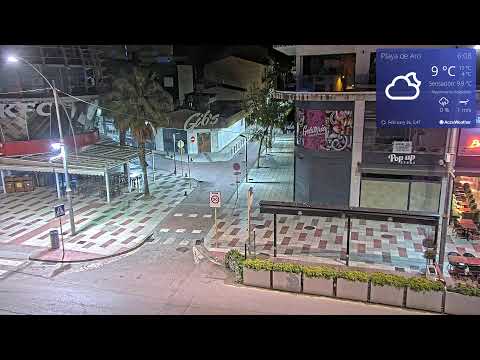


Platja d'Aro Central
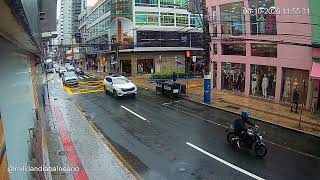
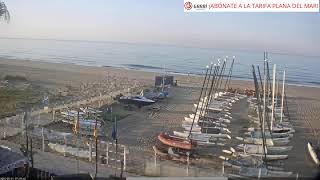
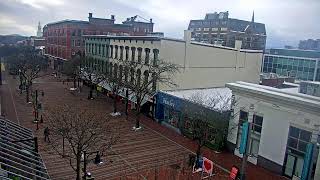
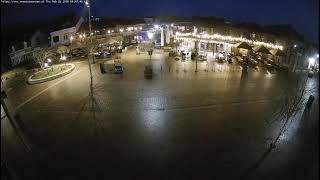
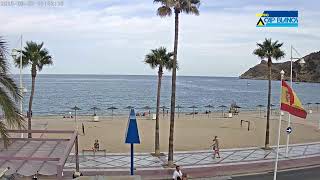
This live webcam stream captures the vibrant shopping district of Platja d'Aro, located in the Girona region of Spain. The feed highlights bustling streets lined with a mix of high-end boutiques and local stores, where colorful storefronts and lively pedestrian activity bring a dynamic urban charm to the coastal town.
Castell d'Aro, Girona, Spain
 ES
ES- Castell-Platja d'Aro
- Castillo de Aro
Castell d'Aro, Platja d'Aro i S'Agaró is a municipality situated in the middle of the Costa Brava within Catalonia, Spain. It occupies the eastern end of the Vall d'Aro, a narrow plain drained by the river Ridaura and positioned between the Cadiretes mountain ranges and the southern end of the Gavarres. The municipality borders Calonge to the north, Santa Cristina d'Aro to the west, Sant Feliu to the south, and the Mediterranean coast to the east, serving as a key administrative unit in this coastal region.
The area's history begins with Neolithic tombs from 2500 BC and Roman ruins at Vila de Pla de Palol dating to the first through fourth centuries AD. Repopulation of the Vall d'Aro started in the ninth century, with the first documented reference to Platja d'Aro appearing in 968. The municipality was officially created in 1858 when the area was divided from Romanyà, Bell-lloc, and others. In 1962, the name changed from Fanals d'Aro to Platja d'Aro, and the old nucleus of Castell was declared an official conservation area in 1995.
The municipality consists of two distinct parts: the ancient inland village of Castell d'Aro and the coastal town of Platja d'Aro. Castell d'Aro is built around a medieval castle and fortified church, while Platja d'Aro stretches along a large beach. The Camí de Ronda connects numerous small beaches and forms part of the GR 92 long-distance footpath. Notable sites include the Castle of Benedormiens, restored in 1970, and the S'Agaró residential estate designed by Rafael Masó Valentí as a self-contained garden city.
Platja d'Aro evolved from a small fishing village into a major coastal resort popular with Catalans and Northern Europeans. The area features hotels, commercial premises, and swimming pools built in the mid-twentieth century. Cultural attractions include the Carnival Fiesta established in 1978 and exhibition spaces within the Castle of Benedormiens. The municipality has historically promoted itself internationally through targeted tourism campaigns focusing on honeymooners and holidaymakers seeking coastal leisure.
The population is recorded as 12,982 as of 2025, though it can exceed 100,000 during the summer months. The economy relies heavily on tourism, with the area characterized by its hot-summer Mediterranean climate under the Köppen classification. Transport access includes the former narrow-gauge railway line converted into a greenway and roads connecting Palamós to Sant Feliu de Guíxols. The region is located in a seismic zone where occasional light shaking may be felt.
 The EARF Engine