










Japeri Station
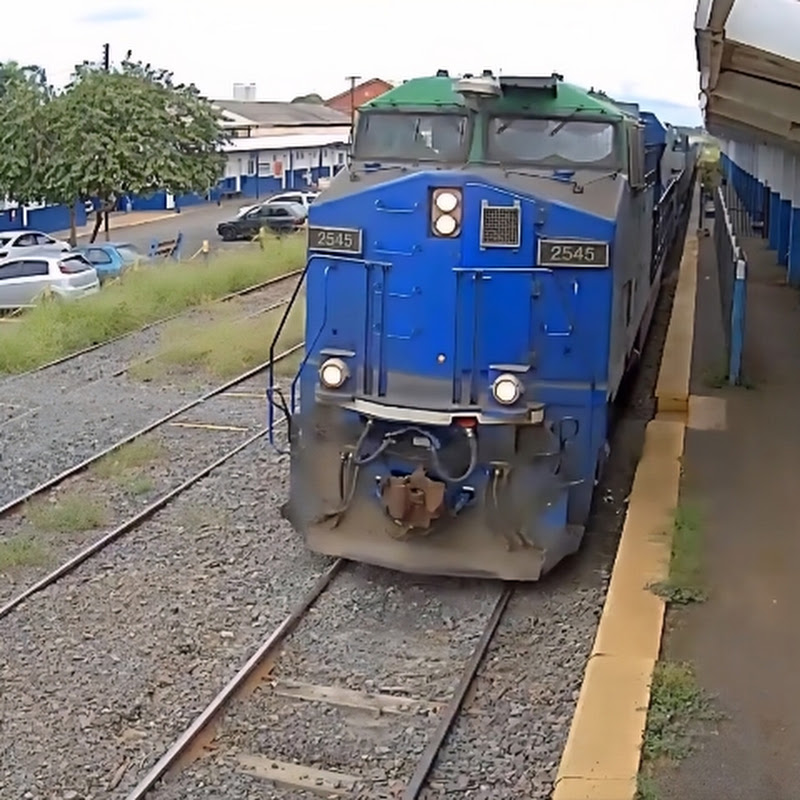
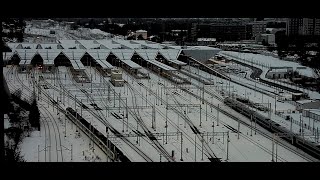
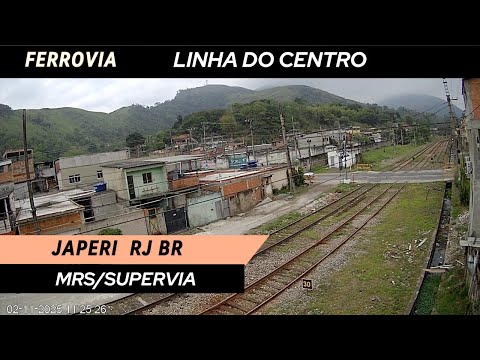
This live stream provides a view of Japeri Station in Japeri, Rio de Janeiro, Brazil. The camera overlooks the railway station and surrounding tracks, capturing trains, passengers and activity around the platforms in real time. Japeri Station is an important railway station in the Baixada Fluminense region and serves as a terminus and interchange point for commuter rail services connecting Japeri with Rio de Janeiro and surrounding communities. The station sits within the centre of Japeri, surrounded by the city's streets and urban activity. The live view captures trains arriving and departing, passengers moving through the station and changing activity around the railway throughout the day. It also provides a real-time look at current conditions at this busy local transport hub.
Japeri, Rio de Janeiro, Brazil
 BR
BR- Japeri
- Município de Japeri
Japeri is a municipality in the state of Rio de Janeiro, Brazil, located in the northwestern part of the Baixada Fluminense metropolitan region. The municipality lies between the densely populated urban areas of Greater Rio de Janeiro and the more rural and forested landscapes toward the foothills of the Serra do Tinguá. Its geography combines residential neighborhoods, low hills, river valleys and areas of Atlantic Forest, creating a transition between the heavily urbanized metropolitan landscape and the greener interior of the state.
The municipality is crossed by waterways and surrounded by areas of tropical vegetation, with the local landscape shaped by the humid subtropical climate of southeastern Brazil. The nearby Serra do Tinguá contains some of the region's most important remaining areas of Atlantic Forest and provides a backdrop of forested hills to parts of Japeri. These protected and semi-protected landscapes support diverse plant and animal life and form an important ecological connection between forest fragments in the wider metropolitan region.
Japeri is part of the extensive urban and transportation network of the Baixada Fluminense. Rail transportation has historically played an important role in connecting the municipality with other parts of the metropolitan region, particularly Rio de Janeiro and neighboring cities. The railway passes through the urban area and remains an important part of daily transportation, while major roads provide additional connections with surrounding municipalities and the wider state.
The municipality developed significantly during the expansion of Greater Rio de Janeiro, with residential neighborhoods growing around transportation routes and employment centers. Today, Japeri contains a mixture of established urban districts, commercial areas and more sparsely developed surroundings. Its proximity to the capital gives residents access to the wider metropolitan economy while the municipality itself retains areas of open land and natural vegetation.
One of the most significant natural areas near Japeri is the Tinguá Biological Reserve, a protected Atlantic Forest landscape extending across the surrounding mountains. The reserve contains dense rainforest, streams, waterfalls and steep terrain and forms part of an important ecological region north of Rio de Janeiro. The forests provide habitat for numerous species and help protect watersheds supplying the surrounding metropolitan area.
Japeri's tropical surroundings and proximity to protected forest create a contrast between urban development and natural landscapes. The lower areas are characterized by residential neighborhoods, roads, railway infrastructure and commercial activity, while the hills and more distant areas become increasingly forested. Warm temperatures, abundant rainfall and dense vegetation contribute to the distinctly tropical appearance of the region.
Today, Japeri is an important part of the Rio de Janeiro metropolitan region while also providing access to the natural landscapes of the Serra do Tinguá and surrounding Atlantic Forest. Its combination of railway history, expanding urban areas, waterways, forested hills and proximity to major protected environments gives the municipality a distinctive position within the wider landscape of southeastern Brazil.
 The EARF Engine