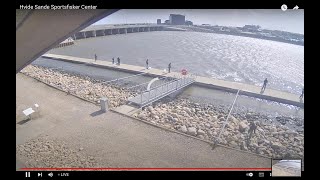












Kingston Peninsula Princess Ferry
This live stream offers a real-time view of the Peninsula Princess Ferry operating between Millidgeville in Saint John and Summerville on the Kingston Peninsula in New Brunswick, Canada. The camera captures the ferry's crossings over the Kennebecasis River, providing a glimpse into this vital transportation link for both locals and visitors. The ferry, named Peninsula Princess, is a propeller-driven vessel with a capacity to carry up to 24 cars and 99 passengers.
Saint John, New Brunswick, Canada
 CA
CA- City of Saint John
- Saint John, New Brunswick
- Saint John (city, New Brunswick)
Saint John is a seaport city situated on the Bay of Fundy in the province of New Brunswick, Canada. Located at the mouth of the Saint John River, it occupies a strategic position along the north shore where the river meets the deep-water, ice-free harbour. The city serves as a significant administrative and economic hub for the region, hosting institutions such as the University of New Brunswick and the New Brunswick Museum.
Established by royal charter on 18 May 1785, Saint John is Canada's oldest incorporated city, formed by uniting the communities of Parrtown and Carleton. Its development was shaped by Loyalist refugees from the American Revolution and subsequent waves of Irish immigration during the Great Famine. The area holds deep historical significance, having been inhabited by Mi'kmaq and Wolastoqiyik peoples long before French explorer Samuel de Champlain landed there in 1604.
The city's character is defined by its hilly topography, rocky soil, and distinctive geological features like the Reversing Falls. Its architecture spans Victorian, Romanesque Revival, and Second Empire styles, with historic districts preserved under heritage conservation laws. Notable landmarks include Brunswick Square, the largest office building in New Brunswick, and Stonehammer UNESCO Geopark, which recognizes the region's exceptional geological significance dating back to the Precambrian era.
Saint John attracts visitors through its growing tourism sector, historic downtown known locally as uptown, and cultural heritage. The city hosts over 1.5 million visitors annually, including cruise ship passengers, drawn to its maritime history and architectural diversity. Key attractions include the New Brunswick Museum, research institutions, and the unique tidal phenomena of the Bay of Fundy, which influence the local environment and daily life.
As of 2016, the city had a population of 67,575, while the 2021 census recorded 69,895 residents within an area of 315.59 square kilometres. The economy features strong industrial bases in oil refining and manufacturing, alongside finance and tourism. The climate varies by season, with winter temperatures dipping to -15°C and summer averages around 22°C, making it a distinct destination for those seeking coastal Canadian experiences.
 The EARF Engine