
Port of Kiel
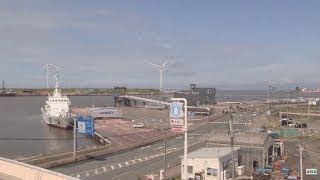
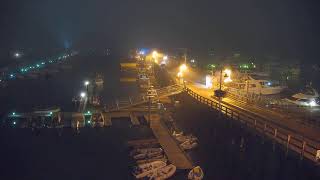
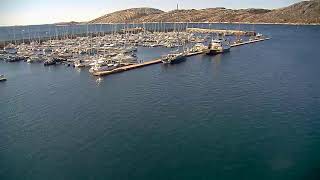
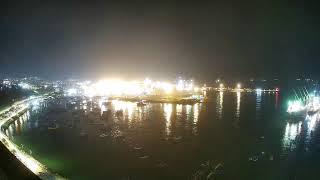
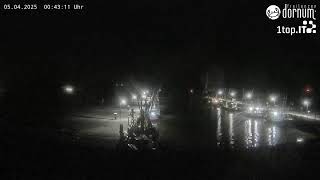
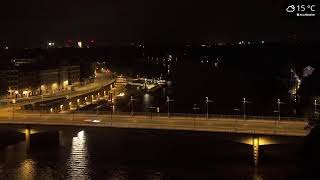
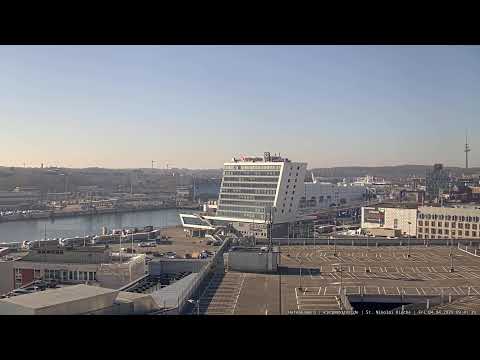
This live webcam view from the Port of Kiel in Kiel, Schleswig-Holstein, Germany offers a panoramic look across the harbour basin, showing the busy ferry and cruise ship terminals, ro-ro and cargo berths, and the Baltic Sea inlet known as the Kieler Förde.
Kiel, Schleswig-Holstein, Germany
 DE
DEKiel serves as the capital city of the German state of Schleswig-Holstein and functions as a major maritime hub on the Baltic Sea. Situated at the end of the Kieler Förde, this coastal city occupies a strategic geographic position that has historically defined its economic and cultural importance within northern Germany.
The city's modern identity was heavily shaped by World War II, during which it was severely bombed due to its submarine-producing shipyards. The destruction was extensive, with approximately 95% of the entire city being destroyed, including almost all historic buildings. This necessitated a post-war rebuilding phase focused on functionality and rapid construction rather than preserving original architectural styles.
Today, Kiel is characterized by modern architecture that dominates the eastern shore of the Förde, where tall cranes mark the active shipbuilding industry. While the city lacks significant pre-war historic structures, it retains landmarks such as the Kieler Schloss, though little of the original building remains. The area continues to be a center for civil and military ship construction.
Kiel holds significant historical weight as the Baltic endpoint of the Kiel Canal, which connects the North Sea to the Baltic Sea. It also played a pivotal role in German history when sailors revolted against officers in 1918, an event that contributed to the end of German monarchism. The city remains a key passenger port alongside Travemünde and Rostock.
Kiel has a population of roughly 250,000 as of 2026. It is well-connected via the DB rail system with regular services to Hamburg and beyond, while the nearby Hamburg Airport provides international access. The city also serves as a ferry terminus for routes to Oslo and Gothenburg, facilitating significant maritime traffic.
 The EARF Engine