








Vatican City
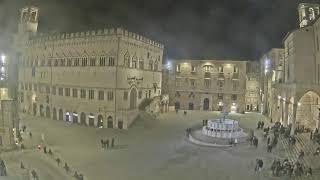
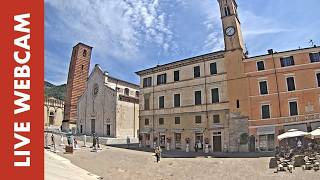
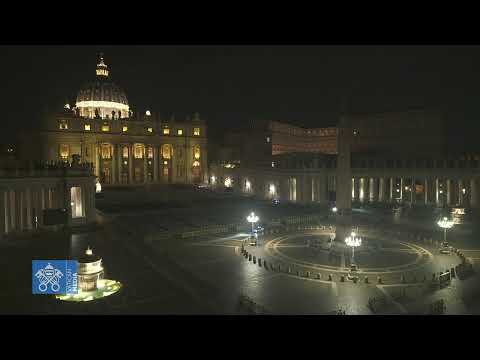
The live camera in Vatican City is positioned to capture St. Peter’s Square, offering a real-time view of its grand architecture and the daily movement of pilgrims and tourists. From this vantage point, viewers can see St. Peter’s Basilica, including its impressive façade and towering dome, as well as the iconic central obelisk and Bernini’s curved colonnades. The feed provides a glimpse of Vatican life—papal events, religious ceremonies, and the bustle of visitors—showcasing the spiritual and historical heart of the world’s smallest independent state.
Vatican City
 VA
VA- Vatican City State
- Vatican
- State of Vatican City
Vatican City, officially the Vatican City State, is a landlocked sovereign city-state situated in Southern Europe as an enclave within the city of Rome, Italy. It serves as the administrative centre of the Catholic Church and the temporal seat of the Pope, who is the head of the worldwide Catholic Church. The state is governed by the See of Rome, commonly known as the Holy See, which is a sovereign entity under international law maintaining spiritual independence and diplomatic relations. Vatican City is often shortened to simply the Vatican, a term also used as a metonym for the Holy See, comprising the Pope and the Roman Curia.
The independent state came into existence in 1929 via the Lateran Treaty between the Holy See and the Kingdom of Italy, establishing it as a creation rather than a vestige of the larger Papal States that existed from 756 to 1870. The name Vatican City was first used in this treaty signed on 11 February 1929, named after Vatican Hill where the state is located. Prior to this, popes had ruled the Papal States for over a thousand years until their territory was seized by the Kingdom of Italy in the mid-19th century. The status of the Pope was referred to as the Roman Question between 1861 and 1929, with popes refusing to leave the Vatican compound until the dispute was resolved.
Covering an area of 44 hectares, Vatican City contains significant religious and cultural sites including St Peter's Basilica, the Sistine Chapel, the Vatican Apostolic Library, and the Vatican Museums. These venues feature some of the world's most famous paintings and sculptures. The geography includes the Vatican Hill, historically known as Ager Vaticanus, a marshy area on the west bank of the Tiber that was drained by Agrippina the Elder in the early first century AD. The Vatican obelisk in St Peter's Square is a remnant from the Circus of Nero, brought from Heliopolis by Emperor Caligula and moved to its current position in 1586.
The state is central to Catholicism, hosting the Papal Conclave where senior clergy elect a new Pope inside the Sistine Chapel when the office becomes vacant. The economy is supported financially by donations from Catholic believers, the sale of postage stamps and souvenirs, fees for admission to museums, and sales of publications. Vatican City has no taxes, and items are duty-free. The Holy See dates to early Christianity and remains the principal episcopal see of the Catholic Church, which had approximately 1.329 billion baptized Catholics in 2018 across the Latin Church and 23 Eastern Catholic Churches.
With a population of 882 as of 2024, Vatican City is the smallest sovereign state in the world both by area and by population, and the only country with fewer than 1,000 people. It is among the least populated capitals in the world. The highest state functionaries are all Catholic clergy of various origins, and the Pope resides mainly at the Apostolic Palace within the city, having moved there after the Avignon Papacy. The state's governance is ecclesiastical or sacerdotal-monarchical, ruled by the Pope who is also the bishop of Rome.
 The EARF Engine