







Maasvlakte, South Holland, Netherlands
 NL
NL- Mississippihaven
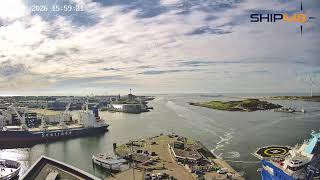
The Maasvlakte Rotterdam is a massive man-made westward extension of the Europoort port and industrial facility within the Port of Rotterdam. Situated in the municipality of Rotterdam in the Netherlands, this area is built on land reclaimed from the North Sea. It serves as a critical component of the region's maritime infrastructure, extending the existing port facilities further into the sea to accommodate growing industrial demands.
Before the project began, the region was a hazardous sandbank for shipping. The Maasvlakte was created in the 1960s by reclaiming land through dykes and sand suppletion, with sand largely taken from the North Sea and the Lake of Oostvoorne. An expansion called Second Maasvlakte was built between September 2008 and May 2013 by spraying sand on the sea bottom, extending the port by about 2,000 hectares.
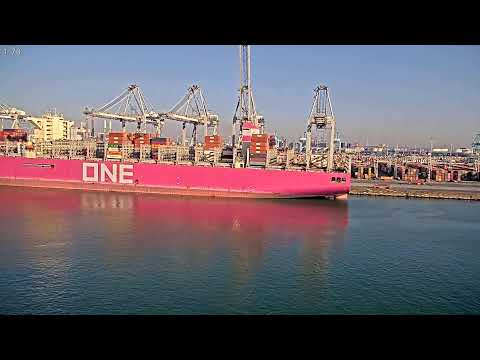
The area features various sections including bulk handling terminals, container facilities, and distribution centers. EMO operates the biggest bulk terminal in western Europe at Mississippihaven, while major companies like Maersk, Europe Container Terminals, and Euromax manage large container terminals capable of accommodating the world's largest ships. A special section is reserved for large distribution centers such as Reebok, DHL, and Kloosterboer.
The Slufter, a deep pit shielded from the surrounding area, stores toxic waste and polluted sand, expected to be fully filled around 2025. The area was formerly used for recreational activities like kite surfing, with the nearby Slufterbeach serving as a nude beach. Since 2010, the road around the Slufter has been closed to public traffic, limiting visitor access to this specific zone.
The population of the Maasvlakte is 5 as of 2022. The economy is driven by industrial operations, including a coal-fired power station run by Uniper generating 1040 megawatts since 1988. Transport connections include direct rail links to Europe via the Betuweroute, river access from the Rhine and Maas, and the A15 motorway ending on the site.
 The EARF Engine