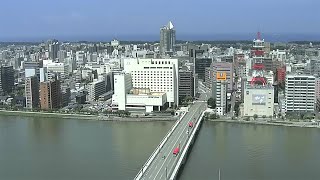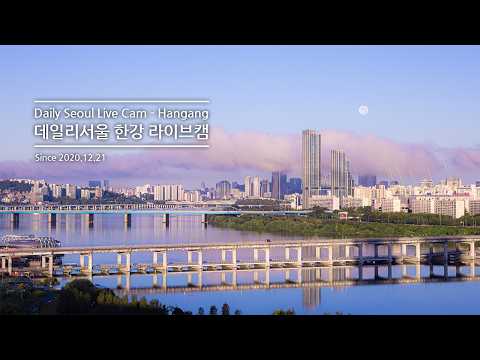
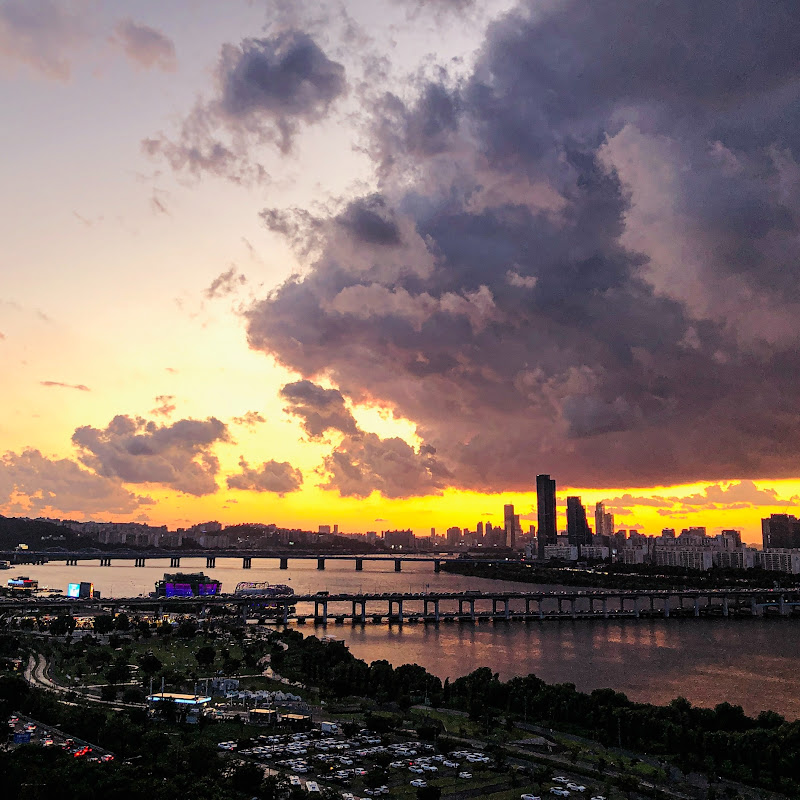
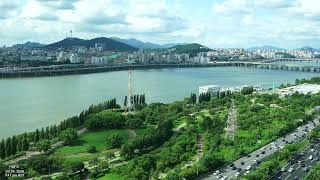
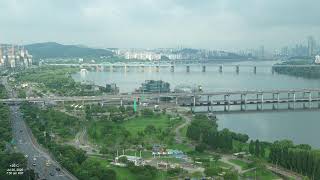
Han River and the skyline of Downtown Seoul
데일리서울 한강 라이브캠
162K subscribers
Yongsan District, Seoul, South Korea

Yongsan District, Seoul, South Korea
 KR
KR- Yongsan-gu
- Yongsan-gu, Seoul
Yongsan District is one of the twenty-five administrative districts of Seoul, South Korea. It sits on the northern bank of the Han River in central Seoul, forming part of the Seongjeosimni area immediately south of the historic Jung district. The district borders Jung to the north, Mapo to the west, Yeongdeungpo and Dongjak to the southwest, Seocho and Gangnam to the southeast, and Seongdong to the east. Its geography features level ground in the west used for transportation and commerce, while the eastern and northern areas rise steeply toward Namsan.
The name Yongsan derives from hanja meaning Dragon Mountain, referencing either a fable about two dragons or the mountainous shape of the area. During the Joseon period, it served as an entry point for seaborne travelers via a Han River port, becoming Korea's first satellite city and an early example of capitalism. In 1884, the Korean government designated it an open district, allowing a foreign community of French, Chinese, and Japanese missionaries to establish themselves. It became Yongsan-gu in October 1945 and officially Yongsan District of Seoul in 1946.
The district is home to notable sites including Yongsan Station, the sprawling Yongsan Electronics Market, Haebangchon, and the Itaewon commercial district. Itaewon is widely recognized as one of Korea's most ethnically diverse regions, attracting foreigners with its shopping centers and nightlife. The area also hosts the Yongsan Garrison, a large United States military base that has gradually wound down since 2021, with forces moving to Camp Humphreys. The site of the former garrison is being redeveloped into Yongsan Park, an ecological park announced in January 2021.
Since the late nineteenth century, Yongsan has been known as the most multicultural district in Seoul, a status influenced by the Yongsan Garrison and establishments like the Seoul Central Mosque. The presence of US personnel historically shaped local culture, leading to the development of a black market and new culinary variations using American food supplies. Today, the district continues to host numerous foreign embassies and serves as a hub for international residents, with the foreign community increasing steadily since 2015.
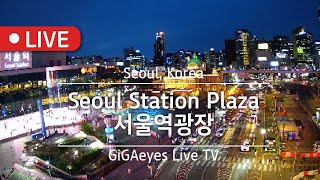
As of 2023, the district has a population of 216,152. Its economy is diverse, dominated by large corporations and KOSPI 200 companies such as Amore Pacific, Orion Confectionery, Cheil Worldwide, HYBE Corporation, and Hyundai Development Company near Seoul Station. The headquarters of the Korean Ministry of National Defense are located in Yongsan, between the northern and southern sections of the former garrison. The official residence and executive office of the President of South Korea also moved to Yongsan from the Blue House in 2022.
 The EARF Engine









![Busan Haeundae Live [부산 해운대 라이브] thumbnail](https://yt3.ggpht.com/JoY2eLuWbI33ilXhXMtHPC31IwGewjCQK0sTM44Oa3uGZPZe04RDSyHva9NRKtUs_eO9mO_b5A=s800-c-k-c0x00ffffff-no-rj)