

Sierra Morena
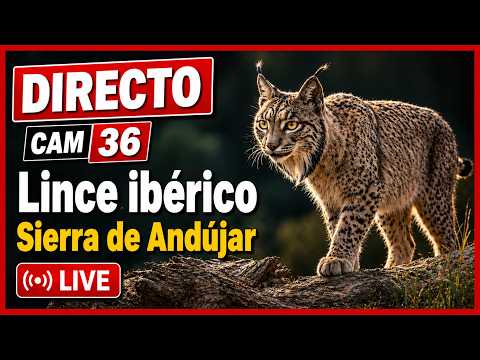
This live stream offers a rare glimpse into the world of the Iberian lynx from Cortijo Gato Clavo in Sierra Morena Natural Park, Jaén, Spain. Set in the heart of Andalusia’s wilderness, this rural sanctuary is dedicated to the protection of one of the world’s most endangered wild cats. The webcam captures the elusive lynx—locally known as “Gato Clavo”—roaming freely in its natural habitat. From stunning landscapes to unexpected wildlife encounters, this stream connects you to real-time conservation efforts and the untamed beauty of southern Spain.
Andújar, Jaén, Spain
 ES
ES- Andújar, Jaén
- Andújar, Spain
Andújar is a municipality located in the province of Jaén within the autonomous community of Andalusia, Spain. Situated in the east of the Guadalquivir valley, the town is geographically defined by the Guadalquivir River, which divides the municipality into distinct northern and southern zones. The northern sector contains the Natural Park of the Sierra de Andújar, while the southern area consists primarily of agricultural fields and countryside. The city proper rests on the right bank of the river, serving as a significant local hub in this region of southern Spain.
The area's history dates back to the Neolithic Age, with early inhabitants including the Iberian Oretani people who founded the town of Isturgi. During the Roman Empire, the site flourished as Municipium Isturgi Triumphale, known for Terra sigillata production. Following the Visigothic period, the town became part of Al-Andalus in the 8th century, emerging as Anduyar under the emirate of Muhammad I of Córdoba. It was fortified by the Almohads in the 12th century before Ferdinand III of Castile took control in the 13th century, leading to Christian repopulation and the eventual granting of city status by Henry IV in 1467.
The urban landscape is characterized by its historical architecture and distinct neighborhoods. The city proper lies along the Madrid-Córdoba railway line. Notable districts include Barrio Montañés, Los Belenes, and the working-class Polígono Puerta de Madrid. The area is also home to the Basilica of Our Lady of Cabeza, a site of significant religious history where Nationalist forces were besieged during the Spanish Civil War. The natural environment features the Sierra de Andújar park to the north, contrasting with the flat agricultural plains to the south.
Cultural life in Andújar is centered around its patron saints, the Virgen de la Cabeza and St. Euphrasius of Illiturgis. The most prominent event is the Pilgrimage of the Virgen de la Cabeza, held on the last Sunday of April, commemorating a legend involving a shepherd who discovered the image in 1227. A local fair celebrated in September focuses on cattle-raising traditions. Historically, the town was renowned for manufacturing porous earthenware jars called alcarrazas from local whitish clay, which kept water cool in the hot weather.
Andújar has a population of 35,610 as of 2025. The local economy includes agriculture and traditional crafts, supported by sports teams such as Club Deportivo Iliturgi and Andújar Fútbol Sala. The climate is Mediterranean (Csa), featuring very hot, dry summers and mild wet winters. Average maximum temperatures in summer often exceed 37.5 °C, making it one of the hottest areas in Europe during that season. The town is twinned with Favara, Italy, and maintains connections to its historical roots through various local customs and annual celebrations.
 The EARF Engine