








St. Moritz, Grisons, Switzerland
 CH
CH- Sankt Moritz
- San Murezzan
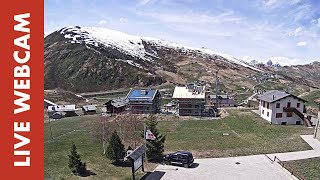
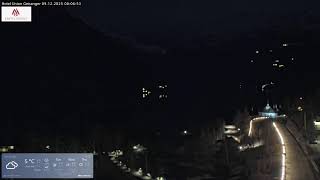
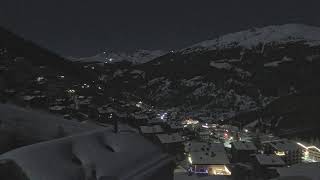
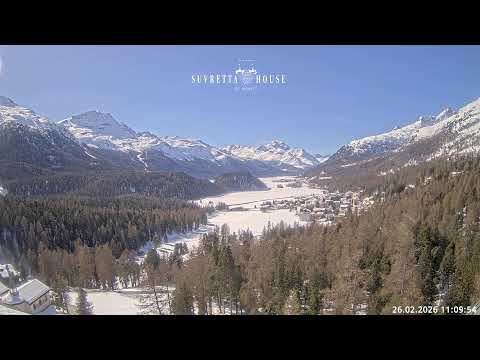
St. Moritz is a high Alpine resort town situated in the Engadine region of Switzerland, specifically within the canton of Grisons. It serves as the major town of Upper Engadine and functions as a municipality in the administrative region of Maloja. The settlement lies on the southern slopes of the Albula Alps below Piz Nair, overlooking the wide glaciated valley of the Upper Engadine and Lake St. Moritz. Its elevation is approximately 1,800 metres above sea level, placing it firmly within a high-altitude alpine environment.
The area's history traces back to Bronze Age votive offerings found at the springs, indicating early Celtic discovery. First mentioned around 1137–39 as ad sanctum Mauricium, the village was named after Saint Maurice. Pilgrimage tourism grew significantly, with Pope Leo X promising absolution in 1519. Winter tourism began in September 1864 when Caspar Badrutt wagered British guests to return in winter, launching the industry in the Alps. The first tourist office in Switzerland was established that same year.
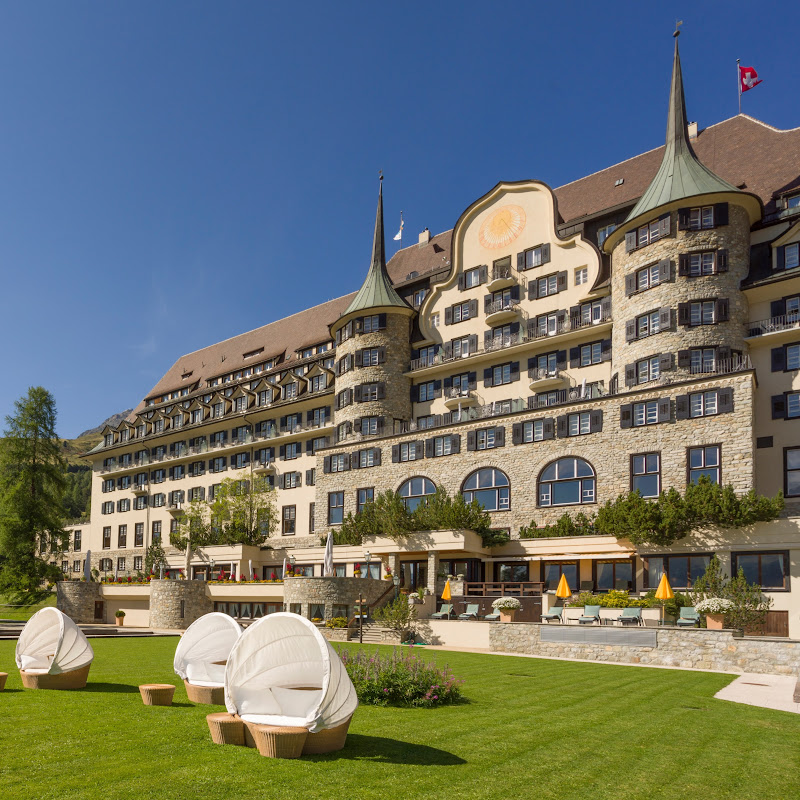
The municipality consists of settlements including St. Moritz-Dorf, Bad, Champfèr, and Suvretta. Notable landmarks include the Segantini Museum, dedicated to painter Giovanni Segantini, and the world-famous Cresta Run toboggan course. The town features the Kulm Hotel, a large luxury establishment, and Chesa Futura, designed by Lord Norman Foster. The area also contains the historic bobsled run, opened in 1904, which is built annually from snow and water, serving as a rare natural venue for winter sports.
St. Moritz is renowned for its champagne atmosphere and status as a chic vacation spot, attracting prominent property owners and international visitors. It hosts the White Turf horse race on the frozen lake and the Snow Polo tournament since 1985. The town has hosted the Winter Olympics in 1928 and 1948, along with numerous skiing and bobsleigh championships. Since the early 1980s, it has been promoted as Top of the World, leveraging its reputation for high-altitude training and luxury tourism.
The year-round population is 5,600, supported by 3,000 seasonal employees and 13,000 hotel beds. St. Moritz enjoys over 300 days of sunshine annually with a subarctic climate. Access is provided via train from Zurich through Chur, the Glacier Express, and a small airport in Samedan. The economy relies heavily on tourism, with activities ranging from skiing and hiking to sailing world championships on Lake St. Moritz during the summer months.
 The EARF Engine