









Trepalle Panorama
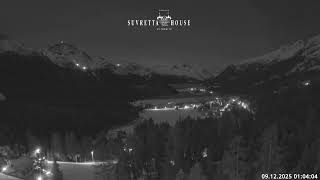
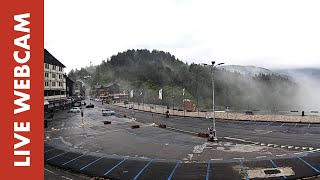
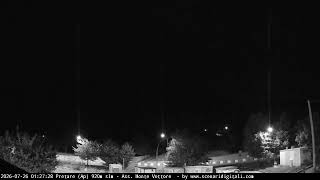
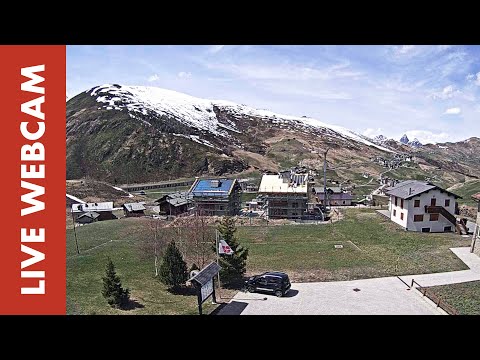
This live stream shows Trepalle, a high-altitude village in the municipality of Livigno, Lombardy. The camera overlooks the valley, the clustered alpine houses, and the road toward Passo Eira. Sitting around 2,100 metres above sea level, Trepalle is known as the highest permanently inhabited village in Italy.
Livigno, Sondrio, Italy
 IT
ITLivigno is a town, comune, and special-administered territory situated in the province of Sondrio within the Lombardy region of Italy. Located in the Italian Alps near the Swiss border, it occupies a high-altitude plateau at approximately 1,816 meters above sea level. The municipality lies in the upper Valtellina valley, extending beyond the Alpine watershed into a basin that drains toward the Black Sea via the Spöl river, rather than the Mediterranean. This unique geographical position makes it one of the few Italian villages not part of the Mediterranean drainage system.
The area's first settlers were likely shepherds during the Middle Ages, with early documents referring to the region as Vinea et Vineola. The name may derive from an old German word for avalanche, a frequent hazard in the valley until 1951. Politically, Livigno has historically followed Bormio’s history, though relations were often tense due to Bormio’s dominance. Until the 1970s, it remained a farming village, but economic shifts and duty-free status have transformed its development, leading to population growth and improved living standards in recent decades.
The town winds along a 12-kilometer street surrounded by mountains, characterized by wood and stone houses. Notable landmarks include Saint Mary's parish church, erected in the late 19th century, and the Caravaggio church with ex voto paintings. Trepalle, a frazione within the municipality, is Europe’s highest inhabited parish. The landscape features high peaks and deep valleys, with the Spöl stream flowing through the valley floor. The area was also home to the Chiesetta di Viera, demolished in the 1960s for the Lago di Livigno reservoir.
Livigno serves as a major tourist center for both winter and summer activities, renowned for its ski resorts and duty-free shopping. The economy relies heavily on tourism, with two main ski areas offering 115 kilometers of pistes. Cultural life includes local bands, folk groups, and a developed media sector with television and online magazines. The town hosts international events like the Union Cycliste Internationale mountain biking championships and the European Freeride Festival, attracting athletes and visitors seeking alpine sports and high-altitude training.
As of 2023, Livigno has a population of 6,789 inhabitants, enjoying one of Italy’s highest birth rates. The economy is driven by tourism and its duty-free status, which exempts goods from Italian VAT but requires income tax payment. Access is limited to three roads: two linking to Switzerland via the Forcola di Livigno and Munt la Schera Tunnel, and one connecting to Italy through the Foscagno Pass. The climate is cold and wet subalpine, with abundant snow from November to May and rare temperatures above 20 degrees Celsius.
 The EARF Engine