

Geiranger
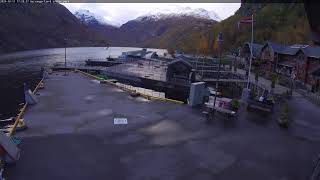
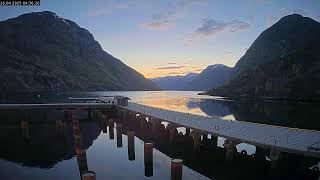
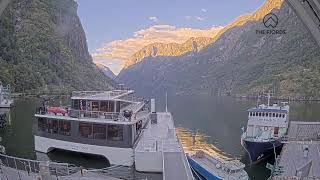
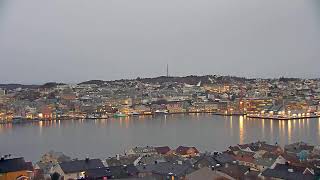
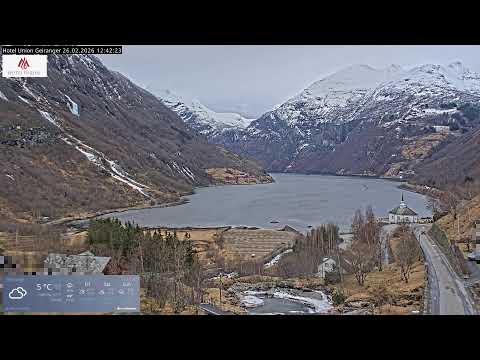
This live stream from Geiranger, in Norway’s Møre og Romsdal county, shows breathtaking views of the Geirangerfjord — a UNESCO World Heritage Site — along with the village’s white octagonal parish church. The camera is located at the historic Hotel Union Geiranger, overlooking steep mountain slopes, cascading waterfalls, and the famous fjord below.
Geiranger, Møre og Romsdal, Norway
 NO
NOGeiranger is a small tourist village situated in the Sunnmøre region of Møre og Romsdal county in western Norway. It lies within Stranda Municipality at the eastern end of the Geirangerfjord, which serves as a branch of the larger Storfjorden system. The village occupies a strategic position at the terminus of this fjord, surrounded by steep mountain sides and historic farms. Its administrative role is primarily that of a rural community and significant tourism hub within the municipality, distinct from the municipal centre of Stranda.
The name Geiranger derives from Old Norse Geirangr, with the suffix angr meaning fjord and the first element referring to pieces of land or fields on mountain sides. The area has been a destination for international tourism since the late 19th century, attracting visitors such as Kaiser Wilhelm before World War I. In 2005, the Geirangerfjord area was listed as a UNESCO World Heritage Site, recognizing its spectacular scenery and cultural landscape. This heritage status underscores the region's importance in preserving Norway's natural and historical identity.
The village is defined by its dramatic geography, including the nearby Seven Sisters waterfall and The Suitor, located just west of Geiranger. The area faces constant threat from landslides from the mountain Åkerneset, prompting the installation of sirens to warn residents of potential megatsunamis. This risk inspired the 2015 disaster movie The Wave and its 2018 sequel The Quake. Architectural features include the Geiranger Church and the Seawalk, a floating pier constructed in 2013 to accommodate cruise passengers disembarking from large ships.
Tourism is the main business for the permanent residents, with the village serving as Norway's third biggest cruise ship port. During the four-month tourist season, it receives between 140 and 180 ships, drawing hundreds of thousands of visitors annually. The annual Geiranger – From Fjord to Summit event in June features a half marathon and bicycle race ending at Mount Dalsnibba. Visitors also explore historic farms like Knivsflå and Skageflå, enjoying the scenic beauty that has earned the destination top ratings from National Geographic Magazine.
The village had a population of 215 in 2023, though separate tracking by Statistics Norway ceased in 2000. The economy relies heavily on tourism, supported by four hotels and over ten camping sites. Access is provided by Norwegian County Road 63 and the Geiranger–Hellesylt Ferry, with the nearest airport being Ørsta-Volda Airport. The tourist season stretches from May to early September, allowing visitors to experience the area's stunning fjord landscapes and mountain scenery during the warmer months.
 The EARF Engine