
Barry Yacht Club
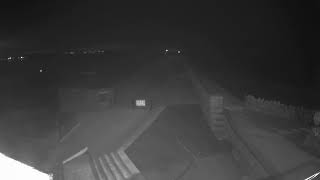
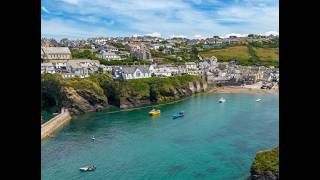
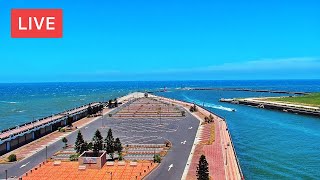
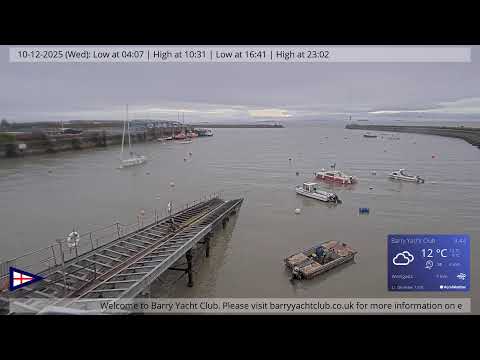
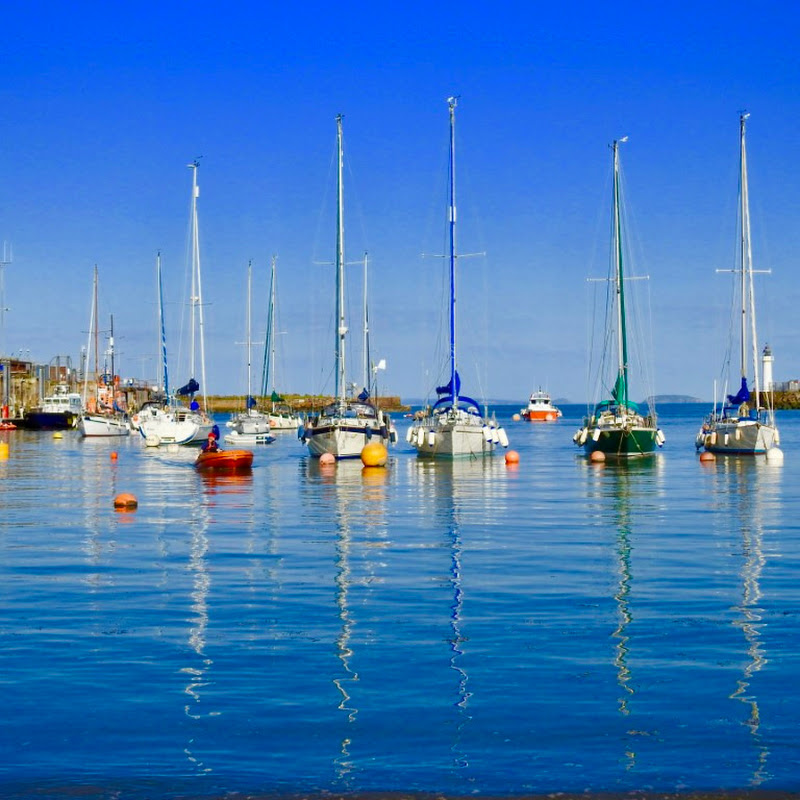
This live stream from Barry Yacht Club overlooks the harbour and Bristol Channel in Barry, South Glamorgan, Wales. Watch boats drift through the historic port, framed by the scenic coastline and the Barry Docks Breakwater Lighthouse — a guiding light for vessels entering the harbour.
Barry, Wales, United Kingdom
 GB
GB- Y Barri
- Barry, Vale of Glamorgan, Wales
- Barry, Glamorgan
Barry is a town and community situated in the Vale of Glamorgan, Wales, within the United Kingdom. Located on the north coast of the Bristol Channel, it lies approximately nine miles south-southwest of Cardiff. The settlement serves as the administrative centre for the Vale of Glamorgan and functions as a significant service hub for the region. Its geographic position places it near the deep-water channel of the Severn Estuary, contributing to its historical and ongoing maritime relevance.
The town's name origin is disputed, potentially deriving from the sixth-century Saint Baruc or the Welsh word for hill. Early history reveals Mesolithic tools and Roman farmsteads, with the area later divided into manors following the Norman Conquest. Barry grew significantly from the 1880s due to the development of Barry Docks, which became the world's largest coal port by 1913. This industrial boom transformed it from a small agricultural village into a major urban centre.
Barry is a seaside resort featuring attractions such as several beaches and the resurrected Barry Island Pleasure Park. The town has absorbed neighbouring villages like Cadoxton and Barry Island, creating a dense urban landscape behind the docks. Notable sites include the ruins of Barry Castle, Whitehouse Cottage, and the Barry Scrapyard where steam locomotives were preserved. The area also includes industrial zones and leisure facilities along the coast.
As a seaside resort, Barry attracts visitors with sandy beaches at Whitmore Bay and Jackson Bay, alongside a long pebble beach extending to Rhoose Point. The town hosts Barry Town United F.C. and maintains twinning agreements with cities in France, Belgium, and Germany. Cultural heritage is preserved through sites like the Barry Memorial Hall and the historic docks, which now support leisure rowing and dinghy sailing activities for tourists.
The population was recorded as 53,369 in 2021, though other estimates cite figures around 56,605. The economy relies on manufacturing, chemical companies, and the docks, which handle bulk cargoes and roll-on/roll-off routes. Access is provided via the M4 motorway, four railway stations, and nearby Cardiff Airport. The town is well-connected by bus and train networks to Cardiff, Bridgend, and Swansea.
 The EARF Engine