

La Crosse, Wisconsin, United States
 US
US- Prairie La Crosse
- Mormon Coulee
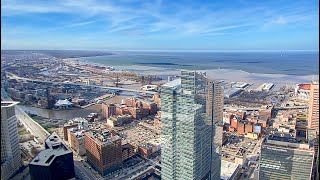
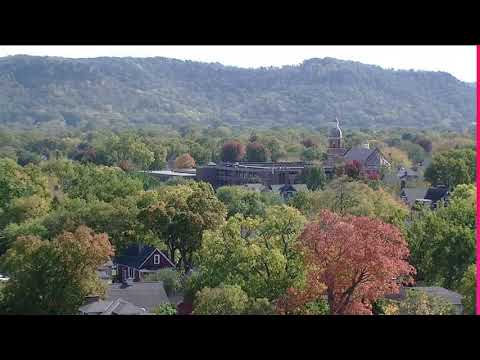
La Crosse is a city in La Crosse County, Wisconsin, United States, serving as the county seat. Positioned alongside the Mississippi River on a broad alluvial plain, it sits on the western border of the midsection of Wisconsin. The city lies between the river and towering bluffs that rise behind it, with the Black River emptying into the Mississippi to the north and the La Crosse River flowing in just north of downtown. This location places it within the Driftless Area, a rugged region composed of high ridges dissected by narrow valleys known as coulees.
The first written record of the site dates to 1805 when Lt. Zebulon Pike recorded the name Prairie La Crosse, derived from a Native American game with sticks resembling a bishop's crozier. In 1841, Nathan Myrick established the first white settlement by building a trading post on Barron Island before moving it to the mainland prairie. A small Mormon community settled nearby in 1844, leaving behind the name Mormon Coulee. Surveyor William Hood platted the village in 1851, leading to rapid growth and incorporation in 1856 following the arrival of the railroad.
The city is divided into north and south sections by a marshland where the La Crosse River broadens. Notable districts include Historic Cass & King, Historic downtown, and College Park near the University of Wisconsin–La Crosse campus. Grandad Bluff, mentioned by Mark Twain, offers an overlook of the three states region and typifies the local topography. The area is frequently referred to as the Coulee Region due to its distinctive geography of high ridges and narrow valleys that define the landscape surrounding the relatively flat prairie valley.
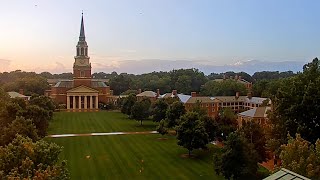
La Crosse serves as a regional educational, medical, manufacturing, and transportation hub for Western Wisconsin. Home to the University of Wisconsin–La Crosse, Viterbo University, and Western Technical College, the city hosts nearly 20,000 students. It is also home to the headquarters or regional offices of major organizations including Kwik Trip, Organic Valley, Mayo Clinic, Gundersen Health System, and Trane. The downtown area has been rejuvenated with bars, restaurants, high-end hotels, and shops presented with an old-town feel.
The population was 52,680 at the 2020 census, with the La Crosse–Onalaska metropolitan area having an estimated 140,000 residents. The city produces a gross domestic product of $10.1 billion for the metropolitan area as of 2023. Access is provided via La Crosse Regional Airport, Amtrak's Empire Builder, and intercity bus services. The area experiences a hot-summer humid continental climate, with July being the warmest month at an average high of 85.4 °F and January the coldest at an average high of 27.4 °F.
 The EARF Engine