

Port Lions, Alaska, United States
 US
US- Masiqsirraq
Port Lions is a city situated on Kodiak Island within the Kodiak Island Borough of the United States state of Alaska. It serves as the headquarters for the Native Village of Port Lions, a federally recognized Alaska Native tribe. The community occupies a specific geographic location defined by coordinates at fifty-seven degrees, fifty-two minutes, and five seconds north latitude, alongside one hundred fifty-two degrees, fifty-two minutes, and forty-eight seconds west longitude. This positioning places it firmly within the Alutiiq cultural region, where the settlement holds its indigenous name, Masiqsirraq.
The community was established to house inhabitants displaced by the Good Friday earthquake in 1964, which destroyed villages on neighboring Afognak and Raspberry Islands. Specifically, residents from Ag'waneq and Port Wakefield were relocated to this new site. The construction of Port Lions was supported by both the United States government and the Lions Club, an organization that also provided the settlement with its name in honor of their contribution. The city first appeared on the 1970 U.S. Census, having been incorporated two years prior in 1966.
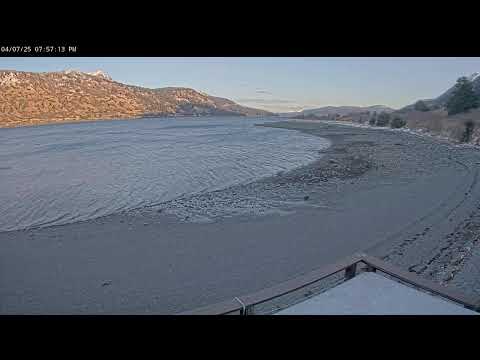
Geographically, the city covers a total area of ten point one square miles, comprising six point three square miles of land and three point seven square miles of water, which accounts for nearly thirty-seven percent of its total surface. The landscape is defined by this significant aquatic presence alongside the rugged terrain of Kodiak Island. The settlement functions as a cohesive rural community, with its physical layout reflecting its origins as a planned relocation site rather than an organic urban growth pattern.
Culturally, Port Lions is deeply tied to its Alutiiq heritage and the history of its displaced residents. The community maintains educational infrastructure through the Port Lions School, a K-12 rural institution operated by the Kodiak Island Borough School District. Additionally, the area hosts scientific interest, with Stanford University operating a remote scientific radio receiver in the city to study very low frequency radio signals, adding a layer of academic significance to its local character.
As of the 2020 census, Port Lions had a population of 170 residents, with a median age of fifty point three years. The demographic profile indicates a rural existence, as one hundred percent of residents lived in rural areas rather than urban zones. The economy and social structure are reflected in household data showing nearly half of households were married couples, while significant portions consisted of individuals or single-parent families. The community remains a small, tight-knit settlement defined by its unique historical origins and geographic isolation.
 The EARF Engine