



Ostseebowling
Ostseebowling Warnemünde Rostock
3.7K subscribers
Rostock, Mecklenburg-Western Pomerania, Germany

Ostseebowling
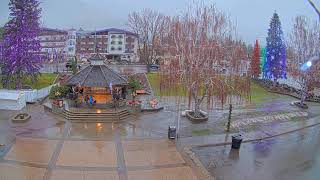
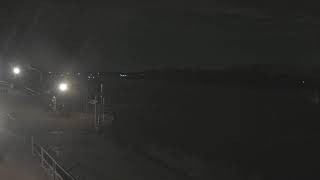
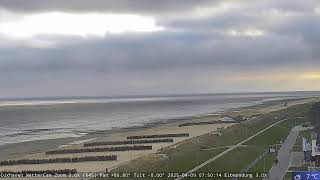
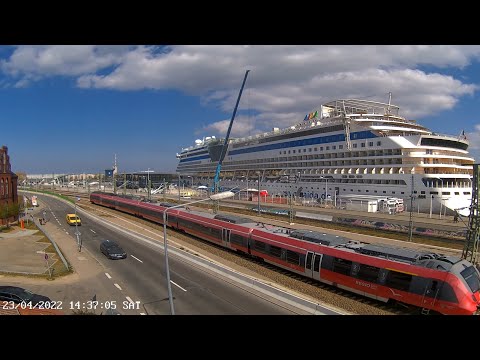
This live view looks toward Ostseebowling Warnemünde in Rostock, Mecklenburg-Western Pomerania, showing the exterior area of the bowling centre along Alte Bahnhofstraße as well as nearby street activity and movement around the harbour district.
Rostock, Mecklenburg-Western Pomerania, Germany
 DE
DE- Rostock, Germany
Rostock is the largest city in the German state of Mecklenburg-Western Pomerania, situated in the Mecklenburgian part of the region near the border with Pomerania. It lies on the estuary of the River Warnow as it flows into the Bay of Mecklenburg of the Baltic Sea. The city stretches approximately 16 kilometers along the river, with its center located further upstream in the southern part of the urban area. As the economic center and only regiopolis of the state, Rostock serves as a significant hub for the region, though it is not the state capital.
The settlement originated in the 11th century when Polabian Slavs founded a community at the Warnow river, deriving its name from the Slavic term for the fork of a river. After being burned by Danish King Valdemar I in 1161, German traders settled the area, which eventually comprised three separate towns before receiving Lübeck law city rights in 1218. Rostock joined the Hanseatic League in 1251 and became a powerful seaport, later serving as the largest coastal port in East Germany. The University of Rostock was founded in 1419, marking an early era of academic prominence.
The city is defined by its historic architecture and distinct districts, including the Altstadt, Mittelstadt, and Neustadt, which were originally separate entities. The Steintor Gate, rebuilt in the Dutch Renaissance style between 1575 and 1577, remains a notable landmark bearing an inscription about harmony. The borough of Warnemünde, which became part of Rostock in 1323 to secure sea access, is now a popular seaside resort. The area east of the river is dominated by the port and industrial estates, while the coastline features long sandy beaches.
Rostock attracts visitors with its Hanseatic heritage, maritime history, and status as Germany's largest port for cruise ships by number of boardings. The city offers a pleasant stay due to its historical significance and the charm of its university quarter. The University of Rostock, the oldest in continental northern Europe, contributes to the cultural landscape alongside its hospital. The historic center retains elements from its time as a major Hanseatic trading post, drawing interest from those exploring the Baltic coast's rich past.
The city has a population of 205,307 as of 2024, making it the third-largest on the German Baltic coast after Kiel and Lübeck. Its economy is driven by the port, which is Germany's fourth largest, and industries including shipbuilding and aircraft manufacturing. Access is provided via Rostock–Laage Airport, located 20 kilometers southeast, and extensive rail connections from Hamburg and Berlin. The ferry routes to Denmark and Sweden are among the busiest in the region, facilitating significant international travel.
 The EARF Engine