
Rósenborg
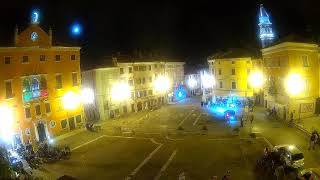
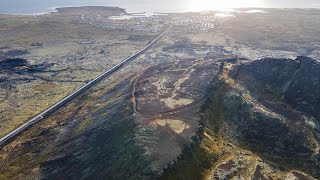
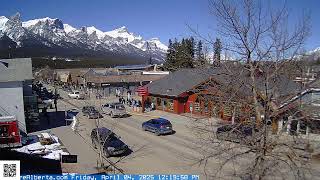
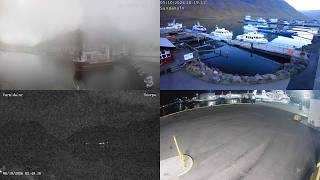
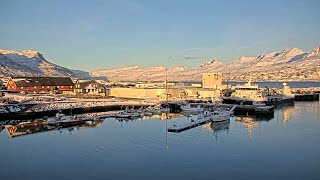
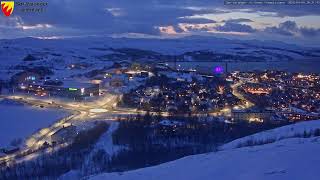
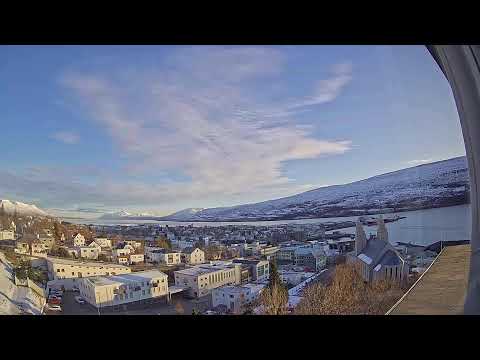
This live stream shows views from Rósenborg Centre in Akureyri, nicknamed the "Capital of North Iceland" and the country's second-largest urban area. Located at the head of Eyjafjörður, Iceland's longest fjord stretching over 60 kilometers, this elevated viewpoint captures the town nestled between dramatic mountains and the sparkling fjord waters. The stream showcases Akureyri's harbor with fishing boats and cruise ships, the iconic Akureyrarkirkja church, and the surrounding peaks. Despite being only 100 kilometers from the Arctic Circle, Akureyri enjoys a relatively mild climate that supports the northernmost botanical garden in the world.
Akureyri, Northeastern, Iceland
 IS
IS- Akureyrarbær
- Akureyrarkaupstaður
Akureyri is a town in northern Iceland, serving as the largest settlement outside the Capital Region. It functions as the country's fifth most populous municipality under the official name Akureyrarbær, which translates to 'town of Akureyri'. The town sits at the head of the Eyjafjörður fjord, positioned on its west side within a narrow coastal strip of flat land surrounded by mountains. This geographical setting provides a natural harbor that has historically defined its development and strategic importance in the region.
The area was originally settled by Norse Viking Helgi magri Eyvindarson in the 9th century, though it did not receive a municipal charter until 1786 when King Christian VII granted it status alongside five other towns. Permanent settlement began in 1778, and the town lost its municipal status in 1836 before regaining it in 1862. During World War II, Allied units were based in Akureyri, including Norwegian-British No. 330 Squadron RNoAF which operated from the area to protect convoys.
The town is centered on Ráðhústorg, or Town Hall Square, near the northwest corner of Pollurinn, a body of sea known for calm winds. Key districts include Innbær, the oldest part on the land strip between the hill and the pool; Brekkan atop the hill; Oddeyri on its peninsula; and Glerárhverfi on the north bank of the Glerá river. The name likely derives from a field near sheltered locations by the river, with the coastline having been reclaimed from the sea over time.
Nicknamed the Capital of North Iceland, Akureyri is an important port and fishing center with a relatively mild climate that allows botanical gardens to flourish without greenhouses. The University of Akureyri, founded in 1987, contributes to the local culture and economy. Visitors can explore the childhood home of children's author Jón Sveinsson, now a museum, and experience the town's role as a hub for commerce and service industries that grew significantly after the war.
As of 2025, Akureyri has a population of 20,050. The economy relies heavily on fishing, with two major Icelandic fishing companies headquartered there, alongside significant contributions from higher education and tourism. Access is provided via the Ring Road, domestic flights from Reykjavík Airport, and international seasonal routes. The climate features cold winters with snow cover from late October to April and mild summers, with precipitation lower than in southern Iceland due to prevailing south winds.
 The EARF Engine