

Kirkenes, Finnmark, Norway
 NO
NO- Girkonjárga
- Kirkkoniemi
- Ǩeârkknjargg
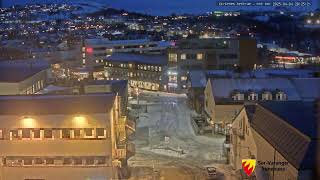
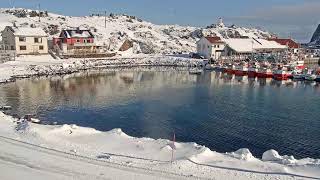
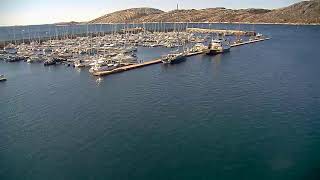
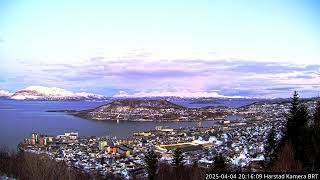
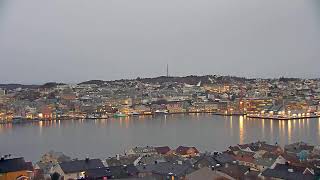
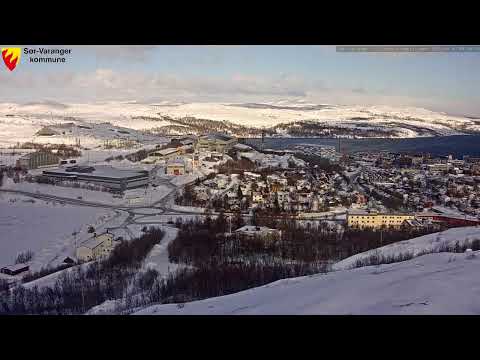
Kirkenes is a town situated in Sør-Varanger Municipality within Finnmark county, located in the far northeastern part of Norway. It rests on a peninsula along the Bøkfjorden, an arm of the Varangerfjorden, near the border with Russia. The settlement lies just east of the 30th meridian east, placing it further east than Istanbul and Saint Petersburg, and marks the northern terminus of the European route E6 highway.
The area was a common Norwegian–Russian district until the present border was settled in 1826. Originally named Piselvnes, the town adopted its current name, meaning church headland, after the Kirkenes Church was built in 1862. It held village status until 1998 when it received official town designation. During World War II, it served as a major base for German forces and suffered extensive destruction from air raids before being liberated by the Red Army in October 1944.
The town is defined by its proximity to the Russian border and its role in regional history. Notable sites include Andersgrotta, a vast World War II underground bunker in the city centre, and the Garrison of Sør-Varanger at Høybuktmoen. The area features northern taiga vegetation with pine and birch forests. Kirkenes also holds historical significance as the location where Norway's flag was raised on liberated territory for the first time during the war.
Visitor appeal is driven by its unique geography and cultural intersections, including the Norwegian Barents Secretariat promoting collaboration with Russia. Tourist attractions feature Grenselandmuseet, which covers war and peace history, and Sami art exhibitions. Winter activities include king crab safaris on the Barents Sea and visits to the Russian Market held monthly on the central square. The town also hosted a notable pride parade in 2017 attracting international participants.
Kirkenes has a population of 3,424 as of 2025. It is served by Kirkenes Airport, Høybuktmoen, with flights to major Norwegian cities, and is an endpoint for the Hurtigruten coastal ferry service. The climate is continental subarctic, characterized by midnight sun from May 17 to July 21 and polar night from November 21 to January 21. The economy is influenced by its border location, mining industry, and tourism infrastructure.
 The EARF Engine