







Narodni Trg Square
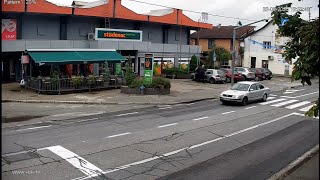
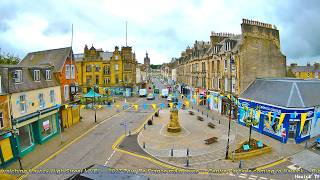
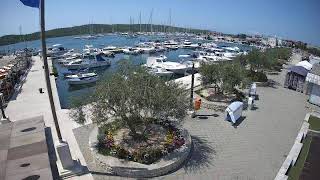
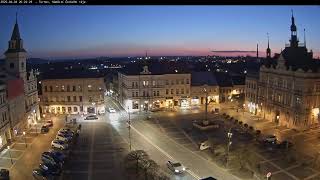
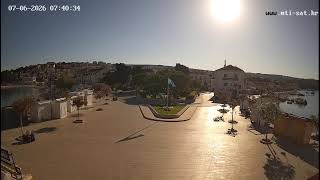
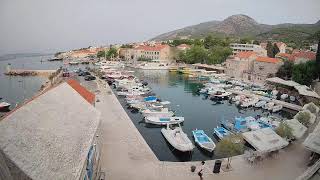
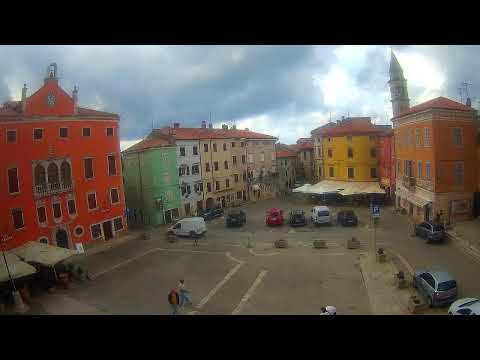
This live cam showcases Narodni Trg, the central square of Vodnjan in Croatia’s Istrian region. The camera frames the historic plaza, lined with charming old buildings, cafés, and local shops, while locals and visitors stroll through the cobblestone streets. Architectural details, including church towers and ornate facades, highlight Vodnjan’s rich cultural heritage.
Vodnjan, Istria, Croatia
 HR
HRVodnjan is a town situated in Istria County within west Croatia. It lies approximately ten kilometers north of Pula, which serves as the largest city in the region. The settlement occupies a strategic position in the Istrian peninsula, maintaining its status as a distinct municipal entity within the broader administrative framework of the county.
Legend attributes the town's origins to an association of seven villas that were part of the colonial goods of Pula. Historical records first list the location, known then as Vicus Attinianum, in 932 during the time of Pietro Candiniano. The town preserved its medieval character through centuries, witnessing significant events such as a peace agreement with Pula in 1331 and the drafting of its Statute in 1492.
The historic nucleus features narrow, irregularly winding streets, cobblestoned roads, and façades reflecting Gothic, Venetian Renaissance, and Baroque styles. Key landmarks include the People's Square, which marks the site of a castle built in the fourth or fifth century and demolished in 1808. Surrounding this square are the neo-Gothic City Hall, the Benussi house, the Bembo house, and the Bradamante palace with its decorated façade.
Cultural appeal centers on religious heritage and art, particularly the St. Biagio church, the largest in Istria, which houses works by masters like Paolo Veneziano and Jacopo Contarini. The town also contains a museum in a thirteenth-century palace belonging to the Bettica family. Other notable sites include the St. Jacob Church, designated as parochial in 1212, and several other churches containing frescos and relics that attract pilgrims.
The population was recorded at 5,838 in the 2021 census, with 3,133 residents living in the city proper. Croatian and Italian are both official languages, with traditional Italian place names legally mandated. The municipality exhibits diverse ethnic composition, including significant Croat, Italian, and Bosniak communities, alongside a historic population known locally as Bumbari who speak the Istriot language.
 The EARF Engine