







Live stream unavailable
This camera is offline or temporarily unavailable. It may be under maintenance, having technical trouble, or it may have been removed by the provider. Listings are monitored continuously and this page updates when the stream returns.


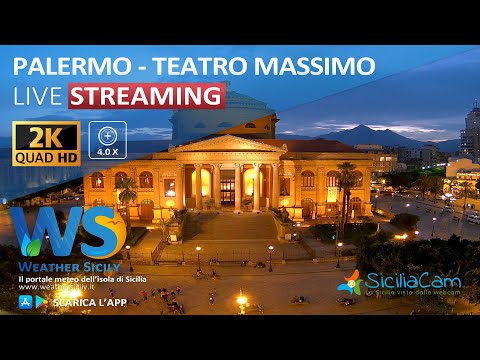
Teatro Massimo di Palermo
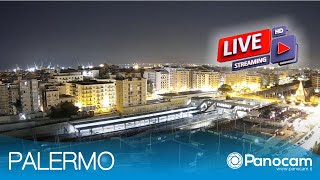
This live webcam shows the Teatro Massimo di Palermo, the grand opera house located in Palermo, Sicily, Italy. Known as one of the largest and most impressive opera houses in Europe, it’s celebrated for its magnificent architecture, acoustics, and cultural significance. The view captures the theatre’s elegant façade and the bustling square in front, where visitors and locals gather to enjoy the lively atmosphere of this historic Sicilian landmark.
Palermo, Italy
 IT
IT- Panormus
- Palermu
Palermo is the capital and largest city of the autonomous island region of Sicily in southern Italy. It sits on the northern coast of the island, facing the Tyrrhenian Sea along the eponymous Gulf. As the administrative center of both the region and its own province, it serves as Sicily's primary cultural, economic, and tourism hub. The city is a significant industrial and commercial center for the Mediterranean, hosting an international airport and maintaining a substantial presence in regional governance and trade.
Founded in 734 BC by Phoenicians who named the settlement Ziz, Palermo later became known as Panormos under Greek influence before adopting the Latin name Panormus during Roman rule. It served as the capital of Sicily for the first time under Arab rule from 831 to 1072, and subsequently became the capital of the Norman Kingdom of Sicily in 1130. The city is the main seat of the UNESCO World Heritage Site Arab-Norman Palermo and the Cathedral Churches of Cefalù and Monreale, reflecting its layered history of Phoenician, Greek, Roman, Arab, and Norman dominations.
The urban landscape features a mix of Romanesque, Gothic, Baroque, and Art Nouveau architecture, particularly evident in its churches and palaces. Notable districts include the historic markets of Vucciria, Ballarò, and Capo, which are renowned for their vibrant atmosphere. The city retains significant Arab-Norman structures, such as the Palazzo dei Normanni, where the King's Court was held. Its geography is defined by the Kemonia and Papireto rivers, which historically formed a natural moat around the ancient walls.
Palermo attracts visitors with its Mediterranean climate, renowned gastronomy, and lively nightlife. The city is famous for its colorful fruit, vegetable, and fish markets, as well as its role in Sicilian wine-making. Cultural life is deeply influenced by Roman Catholicism, with the Feast Day of Patron Saint Santa Rosalia celebrated on 15 July. The city also boasts a rich musical heritage and serves as a major tourist destination in Europe due to its artistic and historical significance.
The municipality has a population of 630,167 as of 2023, with the metropolitan area home to approximately 1.2 million people. The economy relies on tourism, services, commerce, agriculture, shipbuilding, and mechanical industries. Transport access is facilitated by the Falcone–Borsellino Airport located 32 km west of the city center. While the city faces economic challenges, it continues to undergo redevelopment to strengthen its position within the Euro-Mediterranean area.
 The EARF Engine