








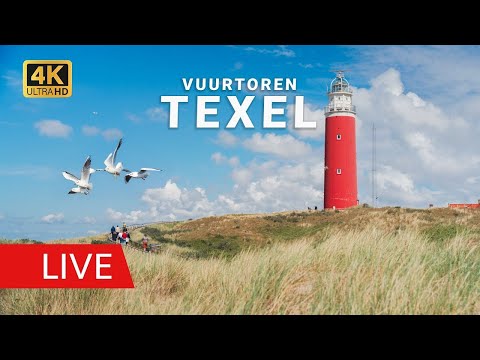

Lighthouse (Vuurtoren Texel)
TexelInformatie
7.6K subscribers
De Cocksdorp, North Holland, Netherlands

De Cocksdorp, North Holland, Netherlands
 NL
NLDe Cocksdorp is a village town situated in the Dutch province of North Holland within the Netherlands. It forms an integral part of the municipality of Texel, located on the island of Texel itself. Geographically, it lies approximately 25 kilometers north of Den Helder, positioning it as the newest village on the island. Its location places it near some of the most dangerous parts of the sea, a factor that has historically influenced its development and maritime significance.
The settlement developed as a road village on the northern part of the island shortly after the poldering of Eierland was completed in 1835. In 1836, it was named after Nicolas Joseph de Cock, who served as the main merchant initiating the poldering project. The village was originally constructed around a harbour, establishing its early infrastructure and community layout based on this maritime foundation during the mid-nineteenth century.
Architectural landmarks define the character of De Cocksdorp, including two significant religious structures. The Dutch Reformed church is a neoclassic aisleless building featuring large pilasters, constructed between 1839 and 1841. Additionally, the Catholic St Francisca Romana Church is a single-aisled Renaissance Revival structure built from 1875 to 1877, which suffered damage in 1945 before being restored between 1949 and 1950.
A prominent feature of the area is a lighthouse built in 1864 due to the hazardous sea conditions where numerous ships have been lost. This structure stands 35 meters tall and was damaged during the Georgian uprising in 1945, subsequently undergoing restoration between 1948 and 1949. These historical events and maritime dangers contribute to the site's heritage appeal, drawing interest for its historical resilience and coastal geography.
As a village town, De Cocksdorp offers a distinct profile within the Texel municipality. The presence of the lighthouse and historic churches provides cultural depth for visitors interested in local history and architecture. While specific population figures are not detailed in the available records, the village maintains its identity through these preserved structures. Its accessibility via road connects it to the broader region, supporting its role as a key settlement on the island.
 The EARF Engine