





Loch Linnhe & West End Car Park
Alex Scotventure
11.3K subscribers
Fort William, Scotland, United Kingdom

Loch Linnhe & West End Car Park
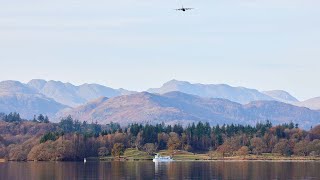
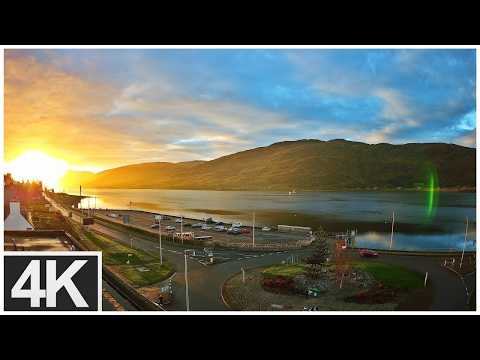
This live webcam stream overlooks Loch Linnhe and the West End Car Park in Fort William, Scotland. Set against the backdrop of the Scottish Highlands, the view captures the tranquil loch waters, passing boats, and the serene charm of this popular gateway to Ben Nevis.
Fort William, Scotland, United Kingdom
 GB
GB- An Gearasdan
- Duncansburgh
- Fort William (Scotland)
Fort William is a town situated in the Lochaber region of the Scottish Highlands, located on the eastern shore of Loch Linnhe within the Highland Council area. It lies at the southern end of the Great Glen, near the head of this long sea loch where the rivers Nevis and Lochy discharge into the sea. The settlement serves as a major tourist centre and the northern terminus of the West Highland Way, while also marking the start of the Great Glen Way leading to Inverness.
The site's earliest recorded settlement was a Cromwellian wooden fort known as the Garrison of Inverlochy, built in 1654 to pacify Clan Cameron. The post-1688 fort was named after William of Orange, and the surrounding settlement underwent several name changes including Maryburgh, Gordonsburgh, and Duncansburgh before becoming Fort William. It withstood a Jacobite siege in 1746 and later saw the completion of the Laggan Dam in 1934 as part of the Lochaber hydroelectric scheme.
The town is centred on the pedestrianised High Street, surrounded by mountains and suburbs such as Lochyside, Caol, and Corpach on the shore of Loch Eil. Notable sites include Ben Nevis, the highest mountain in the British Isles, and Glen Coe to the south. The area is a hub for hillwalking and climbing, with the nearby Glenfinnan Viaduct, known as the Harry Potter Bridge, being a significant landmark visible from the region.
Fort William attracts visitors for its proximity to Ben Nevis, the Nevis Range ski resort, and the Caledonian Canal. It is a huge centre for outdoor activities, including downhill mountain biking and hiking along the Great Glen. The town also serves as the start and end point of the Road to the Isles, drawing tourists interested in the scenic West Highland Line and the historic Jacobite era sites nearby.
The population was 10,175 as of 2016, though a 2011 census recorded 15,757. The economy relies heavily on tourism and an aluminium plant powered by the Lochaber hydroelectric scheme. Transport access includes the West Highland Line railway and nearby Glasgow Airport. The climate is oceanic with cool temperatures and abundant precipitation, while significant elevation variations create subpolar or tundra conditions in uninhabited high areas.
 The EARF Engine