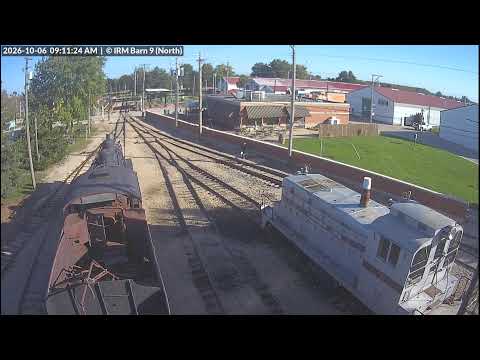
Illinois Railway Museum Barn 9
Illinois Railway Museum
5.7K subscribers
Union, Illinois, United States

Union, Illinois, United States
 US
US- Union, IL
- Union, Illinois
Union is a small village located in McHenry County within the state of Illinois, United States. Situated at coordinates 42.2317 north latitude and 88.5447 west longitude, it occupies a total area of 0.84 square miles, consisting entirely of land. The community drains northward toward the South Branch of the Kishwaukee River, which forms part of the larger Rock River watershed. This geographical setting defines its rural character within the broader Chicago Metropolitan Area.
The settlement's origins are tied to the establishment of a post office named Union in 1852, which has remained in operation since that time. The village derived its name from the federal union of the United States, reflecting the patriotic sentiments of the era. Over the decades, it evolved from a postal stop into an incorporated municipality, maintaining its historical identity while adapting to modern administrative structures within McHenry County.
The landscape is defined by significant industrial and cultural landmarks rather than dense urban architecture. Notably, Union was the site of the world's first fully automatic electrical substation, located on the current site of the water tower just east of Main Street. The village also hosts the Illinois Railway Museum and the McHenry County Historical Society, preserving its technological and local heritage for public viewing.
Visitor appeal centers heavily on its unique historical assets and former entertainment venues. The area was once home to Donley's Wild West Town amusement park, which has since closed, leaving behind a legacy of family entertainment. Today, the presence of the railway museum and historical society provides educational opportunities, while the Marengo-Union Times serves as the local newspaper of record for the greater Marengo and Union area.
As of the 2020 census, the population stood at 551 residents, a decrease from the 576 recorded in 2000. The economy reflects a mix of residential living and tourism driven by its museums. Residents are served by Charter Communications for cable television, distinct from the Comcast service used elsewhere in the Chicago Metropolitan Area. The community maintains a close-knit demographic profile with specific income and age distributions documented in recent censuses.
 The EARF Engine






![[公式]スターキャット thumbnail](https://yt3.ggpht.com/HctH3nbthpSnqkSmip0mKd58sfF8jrSu-3nQQPGjNXZrZ6-M1aWifq38wUMqEBgM31B8Qz08=s800-c-k-c0x00ffffff-no-rj)