![[公式]スターキャット](https://yt3.ggpht.com/HctH3nbthpSnqkSmip0mKd58sfF8jrSu-3nQQPGjNXZrZ6-M1aWifq38wUMqEBgM31B8Qz08=s800-c-k-c0x00ffffff-no-rj)

Nagoya, Aichi, Japan
 JP
JP- Nagoya-shi
- 名古屋市
- 名古屋
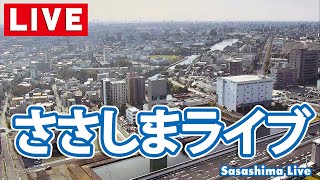
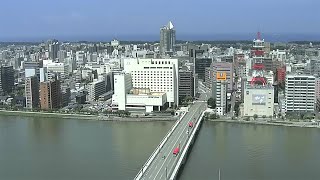
Nagoya serves as the capital and most populous city within Aichi Prefecture, situated in the Chūbu region of central Honshu, Japan. Located on the Pacific coast north of Ise Bay on the fertile Nōbi Plain, it functions as the principal city of the Chūkyō metropolitan area. The city is built on low-level plateaus designed to ward off floodwaters, with the Kiso and Shōnai rivers defining its western and northeastern borders respectively.
The city's origins trace back to the Jōmon and Kofun periods, with significant development occurring in 1610 when Tokugawa Ieyasu moved the capital of Owari Province from Kiyosu to this strategic location. This shift spurred the construction of Nagoya Castle and the growth of a town around it. During the Meiji Restoration, rapid industrialization transformed Nagoya into a major hub for automobile, aviation, and shipbuilding industries, though it suffered extensive damage during American air raids in the Pacific War.
Nagoya is defined by its industrial heritage and historic landmarks, including the reconstructed Nagoya Castle and the ancient Atsuta Shrine, which houses the Imperial Regalia of Japan. Notable sites include Higashiyama Zoo and Botanical Gardens, Hisaya Ōdori Park, and the Port of Nagoya Public Aquarium. The city also features the Nagoya TV Tower and serves as a significant center for transport and industry, hosting the headquarters of major corporations like Toyota and Lexus.
The city plays an increasing role in the MICE industry, having hosted Expo 2005 and the Nagoya Protocol conference in 2010. It is set to host the 2026 Asian Games, becoming the third Japanese city to do so after Tokyo and Hiroshima. Educational institutions such as Nagoya University and the Nagoya Institute of Technology contribute to its cultural landscape, while its history as a manufacturing center draws visitors interested in its automotive and industrial legacy.
As of 2021, Nagoya has a population of 2,326,844, though it is noted as having 2.3 million people in 2025. It maintains a humid subtropical climate with hot, humid summers and cool winters, experiencing rain throughout the year. The city is linked to Tokyo, Osaka, and Kyoto by the Tokaido Shinkansen and remains a vital economic center, known for its diversified economy following World War II.
 The EARF Engine