

Hải Châu district
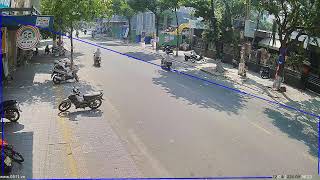
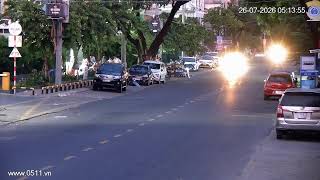
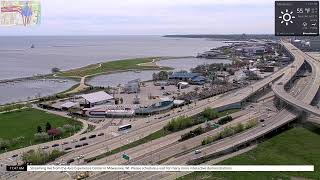
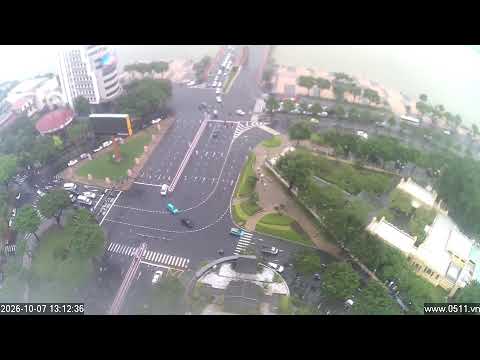
This live stream shows Nguyễn Văn Linh, a vibrant financial route in Hải Châu district, Da Nang city, in central Vietnam. The street leads toward the famous Dragon Bridge (Cầu Rồng) spanning the Hàn River, visible in the background. On the right, APEC Park (Công viên APEC Vietnam 2017) offers a scenic spot along the waterfront. Da Nang, known as the fifth-largest city in Vietnam, is a thriving center for commerce and education in the central region.
Da Nang, Vietnam
 VN
VN- Đà Nẵng
- Tourane
- Turon
Da Nang is a direct-controlled municipality in Vietnam, serving as the fourth largest by population and second largest by geographical area among the country's municipalities. Located on the South China Sea coast in Central Vietnam, it sits midway between Hanoi and Ho Chi Minh City. The city is bisected by the Han River and bordered by mountains to the west and the sea to the east. As one of seven direct-controlled municipalities, it falls under central government administration rather than provincial oversight.
The region's origins trace back to the Cham kingdom established in 192 AD, with nearby Indrapura serving as a capital until approximately 1000 AD. During the Đại Việt period, the settlement was known as Cửa Hàn before becoming Tourane under French colonial rule from 1884 to 1945. In 1997, Da Nang separated from Quảng Nam province to become a centrally controlled municipality designated as a first-class city, later incorporating neighboring areas in a 2025 proposal.
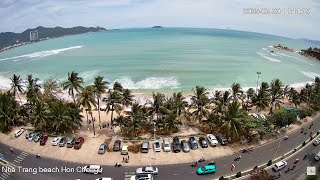
The urban landscape features the wide Han River crossed by bridges like the Dragon Bridge, with commercial centers on the west bank. My Khe Beach runs along the eastern edge, while the Sơn Trà Peninsula to the north hosts a nature reserve for red-shanked douc monkeys. French colonial architecture remains visible due to early invasion history, alongside remnants of American military presence from the Vietnam War, including helicopter hangars near the airport.
Tourism has exploded since the 2010s, drawing visitors seeking sun on beaches or access to nearby Hoi An and My Son ruins. The city offers a mix of rustic backpacker lodges and high-rise hotels, attracting both foreign tourists and domestic travelers during holidays. Its proximity to historical sites and coastal attractions makes it a popular base for exploring central Vietnam, with relatively light traffic compared to larger cities like Hanoi or Ho Chi Minh City.
Da Nang has a population of 2,819,900 as of 2024. It functions as a major transport hub via its port and location on National Route 1 and the North–South Railway, having hosted APEC 2017. The city experiences a tropical monsoon climate with an annual average temperature of 26 °C. The dry season runs from January to August, while the typhoon and wet season occurs from September to December, with high humidity levels throughout the year.
 The EARF Engine