

Slunj Centre
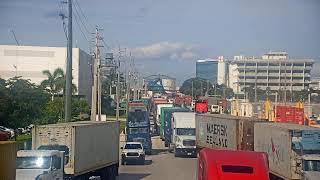
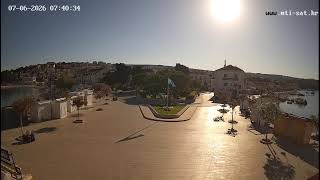
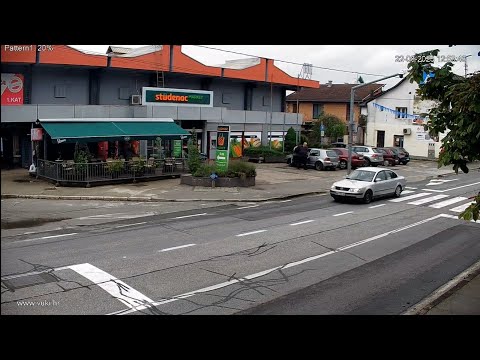
This live webcam shows Slunj’s central road, Trg dr. Franje Tuđmana, along Croatia’s D1 highway. Located in Karlovac County, this scenic town sits at the confluence of the Slunjica and Korana rivers, surrounded by lush mountains and natural beauty.
Slunj, Karlovac, Croatia
 HR
HRSlunj is a town situated in the mountainous region of Central Croatia, positioned along a vital North-South transit route connecting Karlovac to the Adriatic Sea and Plitvice Lakes National Park. It lies at the confluence of the Korana and Slunjčica rivers within Karlovac County. Administratively, it serves as the cultural and social center for the Kordun region, which borders Bosnia and Herzegovina.
The settlement originated as Slovin, an old Frankopan fortification built during wars against the Turks and first mentioned in the 12th century. It became a military outpost of the Croatian Military Frontier after Ottoman ravages in the 16th century, later developing into a fortress headquarters. Following the Treaty of Sistova in 1791, the area saw increased resettlement and eventual reconstruction into its modern form.
The town is defined by its picturesque lower district, Rastoke, where the Slunjčica river cascades into the Korana through numerous waterfalls. This area features well-preserved corn mills dating to the 18th century, including twenty water mills that once anchored local social life. The surrounding landscape is noted for its romantic scenery and natural beauty, attracting visitors with its silver waterfalls.
Cultural significance is highlighted by the 1963 novel The Waterfalls of Slunj by Heimito von Doderer, which features a climactic sequence in this locality. The area has been a subject of scientific research, particularly regarding Rastoke, which was the regional social center in the 19th and early 20th centuries before economic decline due to electric mills and emigration.
Slunj has a population of 4,224 as of 2021, with the broader municipality holding 5,076 residents according to 2011 data. Classified as an underdeveloped area of special state concern, it experiences extreme temperatures ranging from −24.0 °C in 1956 to 40.0 °C in 2017. The town remains a key stop on the route between Karlovac and Plitvice Lakes.
 The EARF Engine