









Live stream unavailable
This camera is offline or temporarily unavailable. It may be under maintenance, having technical trouble, or it may have been removed by the provider. Listings are monitored continuously and this page updates when the stream returns.


Cartagena
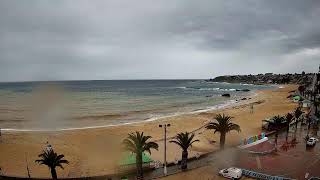
This live webcam stream shows the scenic coastal town of Cartagena, located in the Valparaíso Region of Chile. Known for its beautiful beaches, historic charm, and relaxed seaside vibe, Cartagena is a popular destination for both locals and visitors seeking a break by the Pacific Ocean.
Cartagena, Valparaíso, Chile
 CL
CLCartagena is a commune situated within the San Antonio Province of Chile's Valparaíso Region. This coastal municipality occupies a total land area of 245.9 square kilometers, or approximately 95 square miles. It functions as a third-level administrative division of the country, governed by a municipal council and headed by an alcalde who is directly elected every four years. The commune holds significant demographic weight within its region, accounting for 1.10 percent of the total Valparaíso population.
The area surrounding the town became a major producer of wheat during the seventeenth century, with grain shipped to Peru and Spain via the local port. From 1870 onward, Cartagena evolved into a popular residence for the Chilean intellectual elite, who constructed holiday houses and established it as a fashionable seaside resort. The settlement officially acquired its status as a commune in 1901, solidifying its administrative identity within the broader provincial structure of Chile.
The commune is characterized by its urban centers where the majority of residents live, alongside distinct rural zones that contribute to its varied landscape. The architecture reflects its history as a holiday destination for the elite, with historic structures scattered throughout the coastal area. The community is defined by its strong local identity, with specific demonyms used for men and women: Cartagenino and Cartagenina respectively, highlighting the unique cultural fabric of the town.
Visitor appeal is rooted in Cartagena's historical role as a retreat for the intellectual elite and its enduring status as a seaside resort. The area offers a glimpse into the past through its preserved holiday homes and coastal geography. While specific festivals or museums are not detailed in the primary records, the town's heritage as a fashionable destination continues to draw interest. The local culture is deeply tied to its maritime history and agricultural roots from the colonial era.
According to the 2017 verified facts, Cartagena has a population of 22,738 residents. Historical data from the 2002 census indicated 16,875 inhabitants, with 90.7 percent living in urban areas and 9.3 percent in rural zones. The local economy has historically relied on wheat production and tourism. The commune is represented in the Chamber of Deputies by María José Hoffmann and Víctor Torres, and in the Senate by Francisco Chahuán Chahuán and Ricardo Lagos Weber.
 The EARF Engine