







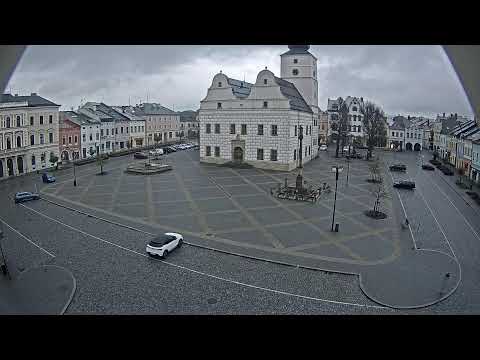


Lanškroun Main Square
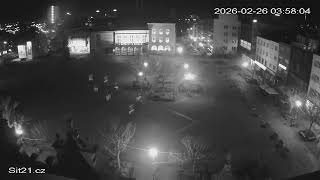
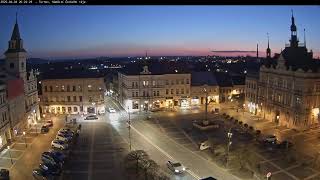
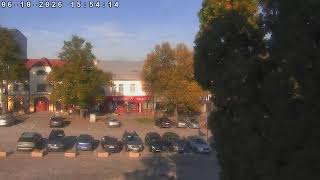
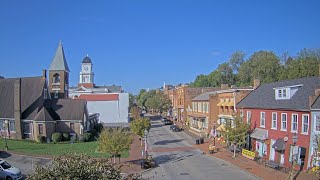
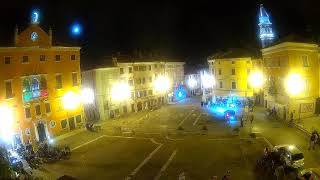
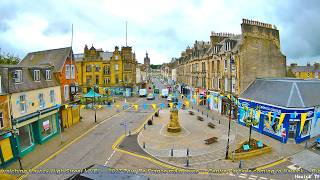
This live stream shows the historic Main Square (nám. J. M. Marků) in Lanškroun, a town in the Pardubice Region of the Czech Republic. The camera captures the Renaissance-style town hall, built between 1581 and 1582, as well as the Marian Column and surrounding architecture. Lanškroun is situated in a valley at the southern edge of the Orlické Mountains and is known for its well-preserved historic center, which is protected as an urban monument zone.
Lanškroun, Pardubice, Czech Republic
 CZ
CZ- Landskron
Lanškroun is a town situated in the Ústí nad Orlicí District within the Pardubice Region of the Czech Republic. It lies in the Orlické Foothills, positioned on the historical border between Bohemia and Moravia. The settlement serves as an industrial hub for the surrounding area, characterized by its location near the Moravská Sázava River and a system of fishponds used for recreation.
The town was founded during the colonization period in the second half of the thirteenth century under the name Landeskrone, meaning Land's crown. Its first written mention dates to 1285 when it was donated by King Wenceslaus II. Over centuries, ownership passed through various noble families and religious institutions, including the Pernštejn and Liechtenstein families, before becoming part of Czechoslovakia in 1918.
The historic town centre is well preserved and protected as an urban monument zone. Its main landmark is the Renaissance town hall, built between 1581 and 1582, which features two original portals. Other notable sites include a castle originally founded as a monastery in the fourteenth century, now housing the town museum, and the Church of Saint Wenceslaus, whose tower was added in 1768.
Lanškroun offers visitors access to the Lanškroun Ponds Nature Park, which includes the Landškrounské rybníky Nature Reserve. The largest pond, Dlouhý rybník, supports water sports and recreational activities. The town also holds historical significance due to the events of 1945, known as the Lanškroun Massacre, which marked a pivotal moment in the expulsion of the German-speaking population and the subsequent Czechification of the community.
As of 2025, the population is recorded at 9,776 inhabitants. The economy is driven by electronics, engineering, and paper industries, with major employers including Kyocera AVX Component and Schott CR. Transport links include the I/43 road connecting Brno to the Polish border and a railway terminus linking to Česká Třebová, facilitating access for residents and travelers alike.
 The EARF Engine