
South American Tapir - Decin Zoo
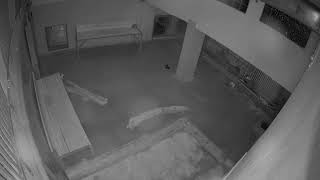
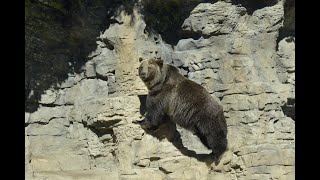
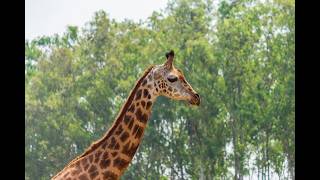
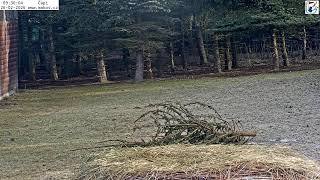
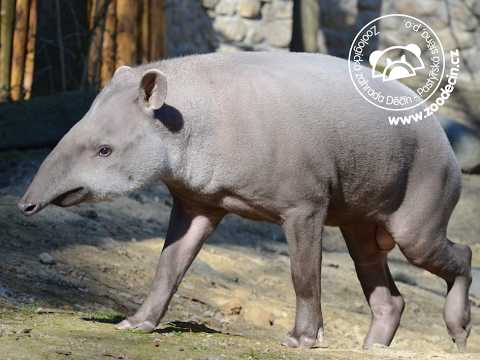
This live webcam streams from Děčín Zoo in Děčín, located in the Ústí nad Labem Region, focusing on the South American tapir enclosure where these rare rainforest mammals can often be seen resting, grazing, or exploring their habitat; the zoo sits on the forested slopes of Pastýřská stěna overlooking the city and the nearby Elbe River, and is home to over 150 animal species from around the world, including several endangered and exotic wildlife species.
Děčín, Ústí nad Labem, Czech Republic
 CZ
CZ- Tetschen
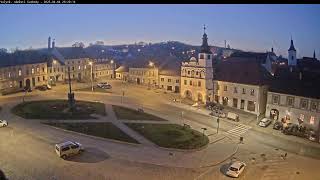
Děčín is a city situated in the Ústí nad Labem Region of the Czech Republic, positioned near the German border at the confluence of the Elbe and Ploučnice rivers. It lies within the transition zone between the Elbe Sandstone Mountains to the north and the Central Bohemian Uplands to the south. The municipal territory spans 117.70 square kilometers, making it the seventh largest municipality in the country by area. Its location places it approximately 18 kilometers northeast of Ústí nad Labem and 40 kilometers southeast of Dresden.
The settlement's origins trace back to La Tène times, with Slavic documentation appearing from the seventh century and the first written mention occurring in 993. A gord was built by Přemyslid dukes before being replaced by a stone castle in the thirteenth century, followed by the founding of a royal city under King Ottokar II. The Lords of Wartenberg acquired the estate in 1305, later selling it to various families including the Thun und Hohensteins, who owned it until 1918. The city suffered significantly during the Thirty Years' War and was merged with Podmokly in 1942.
The city proper sits at an elevation of 135 meters, making it the lowest city in the country, with most built-up areas located in the river valley. Děčín Castle, a prominent landmark on a hill overlooking the Elbe, features Renaissance and Baroque architecture and was visited by Frédéric Chopin in 1835. The urban landscape includes the Old Town Bridge from the sixteenth century and a synagogue built in Art Deco style in 1907. The area is divided into 35 municipal parts, with the historical center located on one bank of the Elbe and modern infrastructure on the other.
Tourism plays a significant role in the local economy, driven by the city's proximity to protected landscape areas and Bohemian Switzerland National Park. Key visitor destinations include Děčín Castle and Děčín Zoo, which houses animals native to the Czech Republic alongside exotic species. The city also benefits from its status as a transport hub, attracting visitors via the picturesque railway route through Saxon Switzerland. Educational institutions in the city focus on transport, reflecting its historical importance as a junction for land, rail, and water travel.
Děčín has a population of 46,376 as of 2025. The economy is supported by major employers such as ČEZ Distribuce and industrial manufacturers like Constellium Extrusions Děčín. The city serves as a vital traffic junction, connected to Prague and Dresden via railway and road networks, including European route E442. It experiences a humid continental climate with an annual average temperature of 9.7 degrees Celsius, characterized by hot summers and cold winters, with precipitation peaking in July.
 The EARF Engine