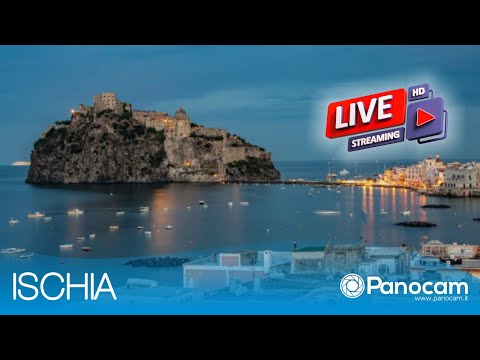


Ischia, Naples, Italy
 IT
IT- Inarime
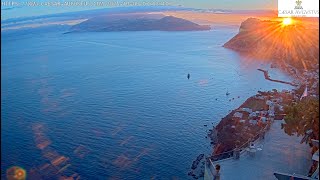
Ischia is a volcanic island situated in the Tyrrhenian Sea at the northern end of the Gulf of Naples, approximately thirty kilometres from the city of Naples. It constitutes the largest of the Phlegrean Islands and lies immediately southwest of the Campi Flegrei area. The island serves as the primary administrative centre for the region, with its name also designating the main comune that shares the island's identity amidst other municipal divisions.
Inhabited since the Bronze Age, the island was established as a Greek emporium in the eighth or ninth century BCE by Euboean Greeks from Eretria and Chalcis. Known to the Greeks as Pithekoussai, the settlement thrived through trade with Etruscans and Phoenicians before being occupied by Syracuse in 474 BC and later seized by Rome in 322 BC. Augustus restored the island to Naples in 6 AD, and it has since experienced various historical influences including Roman, Saracen, and Aragonese periods.
Roughly trapezoidal in shape, the island is almost entirely mountainous, dominated by Mount Epomeo, a volcanic horst rising to 788 metres. The landscape features complex volcanism, including the Green Tuff Ignimbrite eruption and the last eruption in 1302 which created the Arso lava flow. Key districts include Ischia Porto, the commercial hub, and Ischia Ponte, connected by a footbridge to the Castello Aragonese. Other notable towns are Barano d'Ischia, Casamicciola Terme, Forio, Lacco Ameno, and Serrara Fontana.
The island attracts millions of tourists annually due to its volcanic thermal spas, beaches, and culinary offerings. Historical heritage is evident in the Monte Vico acropolis and the Nestor's Cup, a ceramic artifact inscribed with early Greek alphabet lines dating to circa 730 BC. The area also supports rich marine biodiversity, hosting species such as fin and sperm whales, while local research programmes monitor cetacean populations in the surrounding gulfs of Gaeta, Naples, and Pozzuoli.
As of the 2024 census data, the island has a population exceeding 62,000 residents, resulting in a density of roughly 1320 inhabitants per square kilometre. The economy is heavily influenced by tourism, with visitors arriving principally from the Italian mainland and Germany. The island covers an area of approximately 47 square kilometres with a coastline of about 34 to 43 kilometres depending on measurement, maintaining its status as a densely populated and geologically active destination.
 The EARF Engine