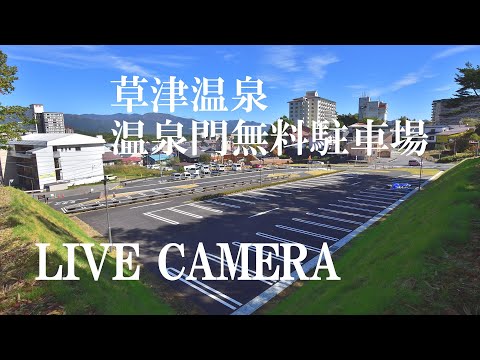


Kusatsu Onsen Gate - Free Parking
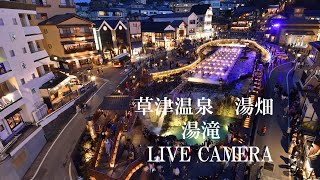
This live stream shows the free parking area at the entrance of Kusatsu Onsen in Gunma, Japan. The camera provides a real-time view of traffic flow, visitor activity, and general conditions around the Onsen Gate parking area. The car park is available for visitors to use freely during operating hours, but closes at night.
Kusatsu, Gunma, Japan
 JP
JP- 草津町
Kusatsu is a town located in Gunma Prefecture, Japan, situated approximately 1,200 meters above sea level. It lies west of the active Kusatsu-Shirane volcano and near Mount Tengu and Mount Motoshirane. As a municipality within Agatsuma District, it functions as a significant administrative unit in the region, known for its high elevation and proximity to several volcanic peaks.
The town's legendary origins trace back to the second-century Yayoi period, though historical records only emerge in the Kamakura era with the founding of Kōsenji temple in 1200. During the Edo period, Kusatsu experienced unprecedented economic growth, becoming one of Japan's most famous hot spring resorts due to therapeutic claims and shogunal patronage. The Meiji period saw reconstruction after a fire and the establishment of modern municipal structures.
The town is defined by its status as a premier onsen destination, featuring the Yubatake hot spring field in its center. It boasts acidic waters with sterilizing properties and serves as a hub for winter sports, having installed Japan's first ski lift on Mount Tengu in 1948. The area also holds historical sites related to Mary Cornwall Legh and the St. Barnabas' Mission, reflecting its diverse social history.
Kusatsu attracts millions of visitors annually, drawn by its healing waters and scenic mountain setting. The town offers a loop bus system and hotel shuttles for navigation, alongside ski resorts that capitalize on heavy winter snowfall. Its cultural appeal is rooted in the traditional bathing culture and the scientific interest generated by figures like Dr. Erwin Bälz, who championed the medical benefits of the local springs.
The town had a population of 6,255 in September 2020, with tourism serving as its main economic driver. Access is primarily via bus from Shinjuku or rail connections through Naganohara-Kusatsuguchi Station, as Kusatsu lacks its own train station. It experiences a humid continental climate with cold winters and heavy snowfall, averaging 3.3 °C annually, making it a year-round destination for both thermal and winter sports enthusiasts.
 The EARF Engine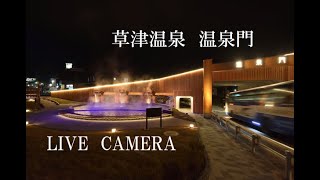




























![[公式]スターキャット thumbnail](https://yt3.ggpht.com/HctH3nbthpSnqkSmip0mKd58sfF8jrSu-3nQQPGjNXZrZ6-M1aWifq38wUMqEBgM31B8Qz08=s800-c-k-c0x00ffffff-no-rj)