









Dunedin Overview
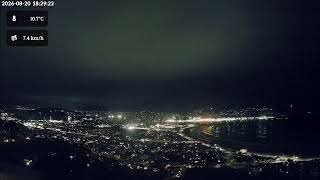
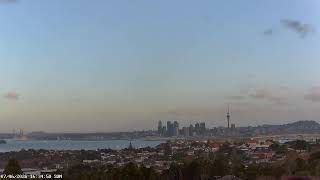
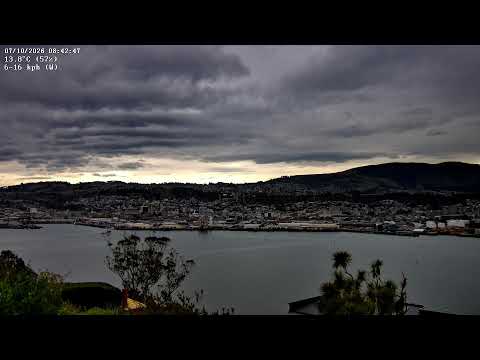
This live stream shows Dunedin, New Zealand's "Edinburgh of the South," the second-most populous city on the South Island. Named after the Scottish Gaelic for Edinburgh (Dùn Èideann), this city was founded in 1848 by Scottish Free Church settlers and retains its strong Scottish character with Victorian and Edwardian architecture, bagpipers, and annual Highland games. Located at the head of the fjord-like Otago Harbour, Dunedin became New Zealand's largest and wealthiest city during the 1860s Otago gold rush.
Dunedin, Otago, New Zealand
 NZ
NZ- Ōtepoti
- Edinburgh of the South
Dunedin, known in Māori as Ōtepoti, serves as the principal city of the Otago region on the central-eastern coast of New Zealand's South Island. It is the second-most populous urban area in the South Island after Christchurch and functions as a major administrative and cultural centre for the region. The city lies surrounding the head of Otago Harbour, with its suburbs extending into surrounding valleys, onto the Otago Peninsula isthmus, and along the Pacific Ocean shores.
The area was first occupied by Māori between 1250 and 1300 AD, with significant settlements established by Kāi Tahu in the mid-17th century. European settlement began with sealers and whalers in the early 1800s, followed by a formal Scottish settlement founded in 1848 by the Lay Association of the Free Church of Scotland. The city's name derives from the Scottish Gaelic Dùn Èideann for Edinburgh, reflecting its colonial origins and the subsequent influx of thousands of Scots between 1855 and 1900.
The urban landscape is defined by hills and harbour remnants of an extinct volcano, featuring grand and quirky streets designed to emulate Edinburgh. Notable landmarks include Baldwin Street, claimed to be the world's steepest street, and numerous historic buildings from the gold rush era when Dunedin was New Zealand's largest city. The city centre is compact and walkable, surrounded by hilly suburbs, with a strong architectural heritage stemming from its period of rapid growth in the late 19th century.
Dunedin is designated as a UNESCO City of Literature and is noted for its vibrant music scene, particularly the Dunedin sound that influenced grunge and indie rock. It possesses a proud Māori and Scots heritage, visible in its streets named after Edinburgh and statues of poet Robbie Burns. The city attracts visitors through its university town atmosphere, wildlife attractions, native forests, and beaches, offering a distinct cultural identity separate from New Zealand's larger metropolitan centres.
The population was recorded at 106,200 as of 2020, with estimates reaching 132,800 by June 2025. The economy is centred on tertiary education, with the University of Otago and Otago Polytechnic accounting for a large proportion of residents, alongside manufacturing, publishing, arts, tourism, and technology industries. As a major regional hub, it maintains extensive transport links, including rail connections to Christchurch and Invercargill, supporting its role as a key destination in the South Island.
 The EARF Engine