Live stream unavailable
This camera is offline or temporarily unavailable. It may be under maintenance, having technical trouble, or it may have been removed by the provider. Listings are monitored continuously and this page updates when the stream returns.


Homigot Sunrise Square
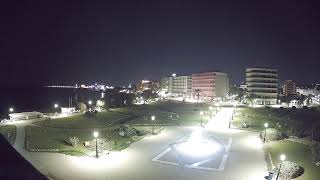
This live 4K webcam stream showcases Homigot Sunrise Square in Pohang, South Korea — a serene coastal landmark famous for its dramatic sunrises and the iconic “Hands of Harmony” sculpture rising from the sea. Set along the East Sea in North Gyeongsang Province, this scenic spot draws visitors year-round for peaceful ocean views, cultural events, and New Year sunrise celebrations.
Pohang, Gyeongsangbuk-do, South Korea
 KR
KR- Pohang-si
- Yongil-gun
- Yeongil County
Pohang is a major industrial city located in North Gyeongsang Province, South Korea. It sits on the country's east coast along the coast of Yeongil Bay at the mouth of the Hyeongsan River. Geologically, the area lies within the Pohang Basin, known for its diverse fossil records. As the largest city in the province, it borders Yeongcheon to the west, Gyeongju to the south, and Cheongsong and Yeongdeok County to the north.
The earliest evidence of human occupation dates to the Mumun Pottery Period between 1500 and 300 BC. Originally a small fishing village, Pohang began developing significantly in 1930 with the construction of a modern harbour. It attained town status in 1931 and city status in 1949. During the Korean War, it served as a strategic location for UN forces and saw fierce clashes between opposing infantry divisions.
The city is defined by its heavy industry and coastal geography. POSCO, one of the world's largest steel producers, has its local plant here, having commenced production in 1972. Tourist attractions include Jukdo Fish Market, Yeongildae Beach, Wolpo Beach, and Pohang Songdo Beach. Naejangsan Mountain divides Pohang and Yeongdeok, featuring twelve waterfalls, while the South Korean Marine Corps 1st Division is stationed in the city.
Pohang offers a blend of industrial heritage and natural beauty. The local economy historically relied on iron, steel, shipbuilding, and fisheries, though it now strives to become a diversified center for environmentalism and arts. Visitors are drawn to fresh seafood at Jukdo Market and the region's agricultural products, including grapes, persimmons, and garlic chives. Gwamegi is a notable local specialty.
The population was 503,780 as of 2022. The city has a humid subtropical climate with mild winters and warm summers, receiving approximately 1,152 mm of precipitation annually. Transportation includes trains from Seoul and Daegu, ferry routes to Ulleung Island, and domestic flights at Pohang Gyeongju Airport. Local transit is served by city buses connecting various districts and terminals.
 The EARF Engine















![Busan Haeundae Live [부산 해운대 라이브] thumbnail](https://yt3.ggpht.com/JoY2eLuWbI33ilXhXMtHPC31IwGewjCQK0sTM44Oa3uGZPZe04RDSyHva9NRKtUs_eO9mO_b5A=s800-c-k-c0x00ffffff-no-rj)