








Madrigal de las Altas Torres
SEOBirdLife DIRECTO2
1.6K subscribers
Madrigal de las Altas Torres, Ávila, Spain

Madrigal de las Altas Torres
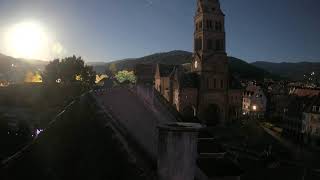
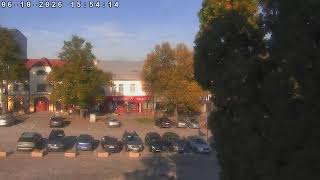
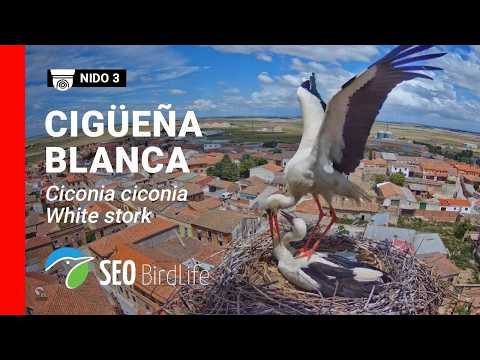
This HD live stream offers a view of a white stork in its nest, perched above the scenic village of Madrigal de las Altas Torres in Ávila, Spain. To the right, the Iglesia de Santa María del Castillo stands as a historical landmark, while in the distance, the ruins of the Convento Agustino de Extramuros, built between the 14th and 16th centuries, add to the area’s cultural richness.
Madrigal de las Altas Torres, Ávila, Spain
 ES
ES- Madrigal de las Altas Torres, Ávila
- Madrigal de las Altas Torres, Spain
Madrigal de las Altas Torres is a municipality situated in the province of Ávila within the autonomous community of Castile and León, Spain. It occupies the northernmost end of the province, positioning it near the borders with the provinces of Salamanca and Valladolid. The town covers a total area of 106.80 km2, establishing its physical footprint in this specific region of central Spain.
The settlement's origins trace back to the Middle Ages, where it was recorded under the names Matrigale and Madrigal. It previously served as a hamlet within the land of Arévalo before earning a fuero in 1017, which was later ratified in 1168. This legal status linked it closely to the affairs of the House of Trastámara during the late Middle Ages. The historical centre was officially declared a bien de interés cultural (conjunto histórico) by the Junta of Castile and León in September 2020.
During the Middle Ages, the town was encircled by walls that followed a near-circular outline, defining its medieval character. Today, parts of these fortifications remain preserved, with the southwestern section being particularly notable among the surviving structures. The area is also recognized for its notable historical figures, including Isabella I of Castile, who lived there from 1451 to 1504, and Vasco de Quiroga, born in the late 15th century.
The municipality holds significant cultural weight due to its association with prominent historical personalities such as Alonso Tostado, who died in 1455, and Catalina de Balmaseda y San Martín, a prioress born there in 1543. These connections to the House of Trastámara and other influential figures provide a deep historical narrative for visitors. The site offers a glimpse into the late medieval period through its preserved architecture and documented lineage of notable residents.
The town experienced a massive rural flight after the 1950s, impacting its demographic trajectory. As of 2025, the population is recorded at 1,281 inhabitants. The toponym includes the second part of the current placename as a late modern addition, distinguishing it from earlier historical references. The community maintains its identity through its preserved historical centre and its status as a distinct municipality within the broader administrative framework of Ávila.
 The EARF Engine