







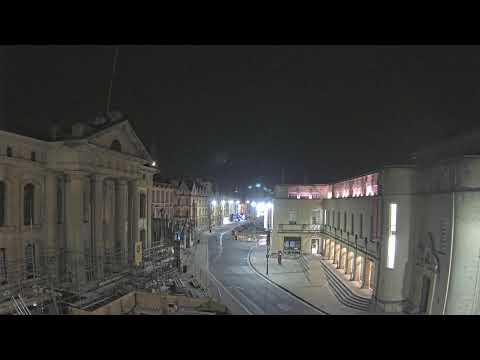


Oxford, England, United Kingdom
 GB
GB- Oxenaforda
- Ford of the Oxen
- Dreaming spires
Oxford is a cathedral city and non-metropolitan district in Oxfordshire, England, serving as the county town. It sits at the confluence of the rivers Thames, known locally as the Isis, and Cherwell, where these waterways meet south of the city centre. This geographical position has historically constrained the size of the urban core while providing strategic importance. The city is located approximately 56 miles north-west of London, positioning it within easy reach of the capital yet distinct in its own county setting.
The settlement dates back to the Saxon period, with its name derived from the Old English Oxenaforda, meaning ford of the oxen. It was granted city status in 1542 when the Diocese of Oxford was created and Christ Church college chapel became a cathedral. The town grew in national importance during the Norman period after Robert D’Oyly built Oxford Castle in 1071. Teaching began in the 11th century, leading to the establishment of the University of Oxford, the oldest university in the English-speaking world, by the late 12th century.
Carfax Tower is considered the centre of Oxford, where Cornmarket Street and Queen Street form a pedestrianised hub. The city features buildings in every style of English architecture since late Anglo-Saxon times, including the historic Bodleian Library and numerous colleges like Christ Church. The university has no central campus but consists of approximately 40 colleges with individual characters. The area is often used by film crews due to its historic buildings, and the city is surrounded by the Oxford Green Belt which regulates surrounding rural space.
Oxford represents the English academic establishment alongside Cambridge, known collectively as Oxbridge. It is a haven of tradition driven by students, light industry, and technology. The city hosts world-class museums and the Bodleian Library, with colleges like Magdalen offering deer parks and University College attracting literary fans. The divide between town and gown has existed since the Middle Ages, yet the vibrant modern life and picturesque architecture make it a significant destination for visitors seeking both academic heritage and cultural engagement.
The population was 147,500 as of 2013, though other records cite 166,034 in 2024. The economy includes motor manufacturing, education, publishing, science, and information technologies, with Oxford University Press being a major employer since the 19th century. Transport links include the M40 motorway and railway stations connecting to London and Birmingham. Oxford has a maritime temperate climate with uniform precipitation, recorded temperatures ranging from −17.8 °C in 1860 to 38.1 °C in 2022.
 The EARF Engine