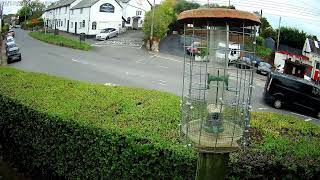












Swanage Station – Swanage Railway
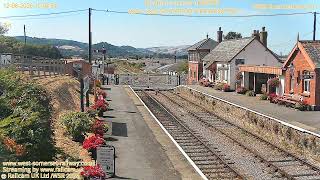
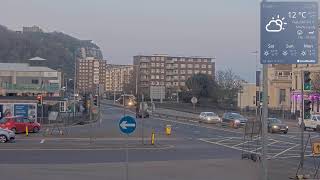
This live stream overlooks Swanage Station on the Swanage Railway, a preserved heritage line running through the Isle of Purbeck in Dorset. The camera captures steam and diesel operations, passenger movements on the platforms, and the daily activity of one of England’s most scenic heritage railways.
Swanage, England, United Kingdom
 GB
GB- Swanage, Dorset
Swanage is a coastal town and civil parish situated in the south-east of Dorset, England. It lies at the eastern end of the Isle of Purbeck, serving as one of the area's two principal towns. Geographically, it is positioned approximately six and a quarter miles south of Poole and twenty-five miles east of Dorchester. The settlement occupies a prominent location on the Jurassic Coast, a designated World Heritage Site, offering direct access to the English Channel.
Originally a small port and fishing village, Swanage flourished during the Victorian era as a significant quarrying port and later as a seaside resort for the wealthy. Its history includes early mentions in the Anglo-Saxon Chronicle of 877 regarding a Danish naval disaster. The town's development was heavily influenced by John Mowlem and George Burt, who imported stone and built key infrastructure, including the first pier and gas works, transforming it into a popular destination for the rich during the nineteenth century.
The town features many listed buildings and two conservation areas: Swanage Conservation Area and Herston Conservation Area. Notable landmarks include the Victorian pier, the Swanage Steam Railway, and Durlston Country Park to the south. Nearby attractions encompass Ballard Down, Old Harry Rocks, and Studland Bay. The seafront includes a clock tower commemorating the Duke of Wellington and the Swanage Town Hall, which utilizes the façade of London's Mercers' Hall.
Swanage remains a popular tourist resort, with tourism serving as its primary industry. Visitors are drawn to the bay's sandy beaches, sheltered waters, and various attractions during the peak summer season. The town offers refreshments, watersports equipment, and cultural sites such as the Quarr Gallery. Its position on an east-facing bay provides protection from prevailing southwesterly winds, ensuring generally calm seas suitable for swimming and boating activities throughout the warmer months.
The civil parish had a population of 9,601 in the 2011 census, though verified data cites 9,426 as of 2021. The economy relies heavily on tourism, supported by local cottage industries and retail outlets. Transport access improved significantly with the introduction of the railway in 1885 and the restoration of the Swanage Railway branch line. The area experiences a maritime climate with warm summers and cool winters, making it accessible year-round for heritage and coastal exploration.
 The EARF Engine


























![[公式]スターキャット thumbnail](https://yt3.ggpht.com/HctH3nbthpSnqkSmip0mKd58sfF8jrSu-3nQQPGjNXZrZ6-M1aWifq38wUMqEBgM31B8Qz08=s800-c-k-c0x00ffffff-no-rj)